Stucco gives Venice, FL homes their look, but the material needs more than a standard coat of exterior paint to survive the Gulf Coast climate. Homeowners searching for stucco exterior painting in Venice, FL often find that general house painters skip the prep work mineral-based substrates need when they’re exposed to salt air and strong UV. Pro Painting & Associates has served Venice, FL homeowners with licensed and insured stucco painting services for over 15 years, and the focus has always been on the prep work that keeps coatings from failing early.
Stucco needs breathable, elastomeric coatings that accommodate thermal expansion and keep moisture from getting trapped in humid climates. Treat it like wood or vinyl siding and you’re looking at costly rework. A proper stucco job addresses the substrate’s chemistry and movement before any color goes on, so the finish protects the structure instead of just covering it.
Why Stucco Exterior Painting in Venice Requires Specialized Prep
Florida’s coastal environment hits building envelopes with salt spray, high humidity and constant solar gain, all at once. Unpainted or poorly maintained stucco in coastal Florida can absorb a lot of moisture during summer storms, and that water speeds up substrate damage once it gets trapped behind an impermeable film. Standard acrylic latex paints made for wood siding tend to form a plastic-like shell on stucco. That shell blocks vapor transmission, so the coating blisters and peels as pressure builds underneath.
You need a contractor who treats stucco as a cementitious system, one that calls for alkaline-resistant primers and vapor-permeable topcoats made for masonry. The intense afternoon sun in Sarasota and Manatee counties also drives heavy thermal cycling, where the surface expands and contracts daily at a different rate than the block or lath underneath. That constant movement shears rigid paint films away from the substrate unless the coating has enough elasticity to bridge the micro-movements without losing its grip.
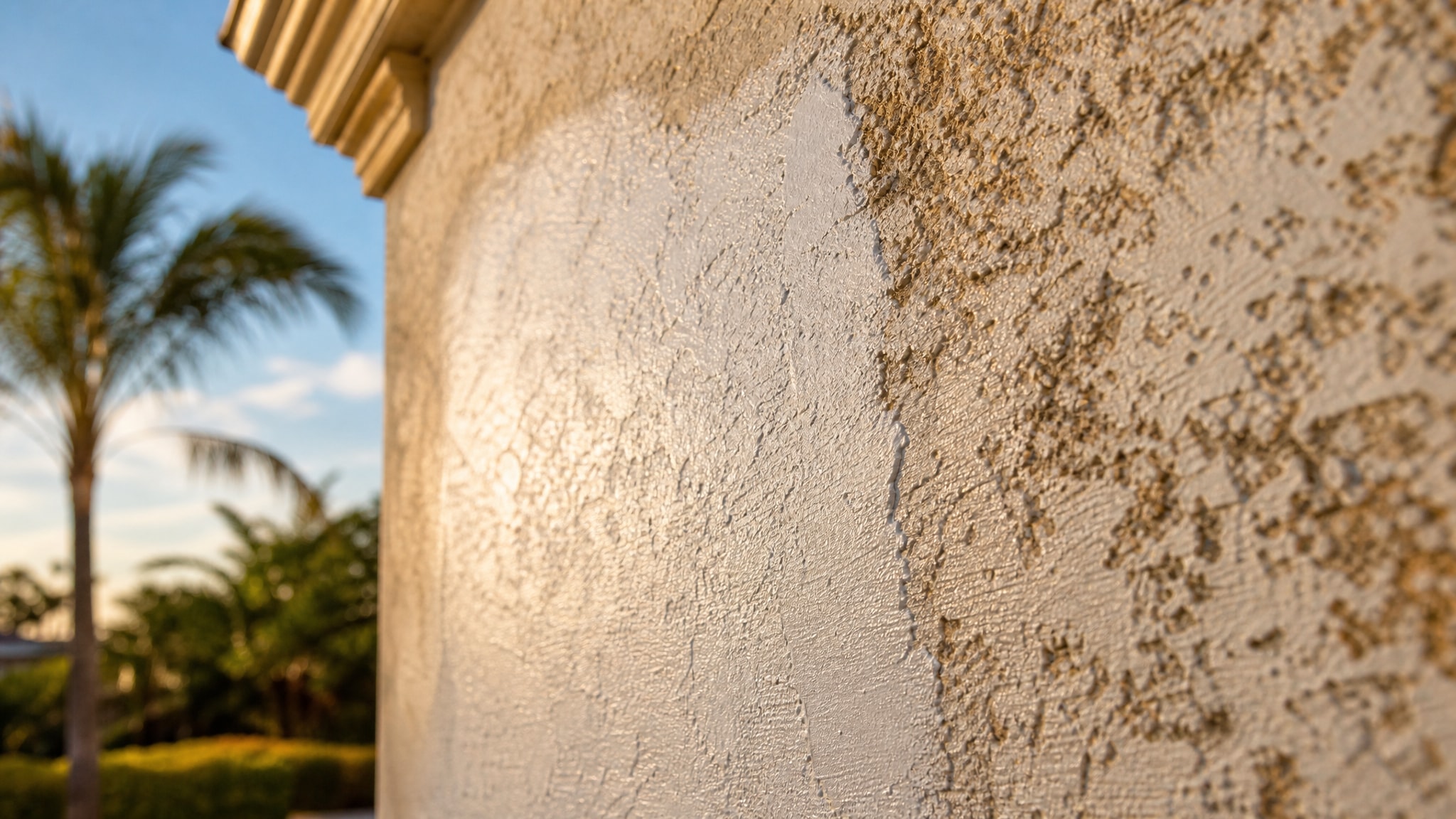
Stucco prep differs from other siding because the surface texture itself has to be preserved while chalky oxidation and biological growth come off. High-pressure washing alone isn’t enough, and it can damage the surface if the nozzle gets too close to the soft aggregate. Experienced stucco house painters use lower pressure with cleaning agents built to lift mold and efflorescence without eroding the finish coat. That careful cleaning lets the new coating bond to the open pores of the stucco, rather than sitting on a layer of dust or dead paint.
Essential Stucco Crack Repair Before Painting
Paint is a decorative and protective membrane, not a structural repair material. Apply it over active cracks and you’ll see the failure within a season. Hairline cracks in stucco often reappear within months if they’re sealed only with paint instead of flexible caulk or a patching compound built for masonry movement. These cracks become direct channels for wind-driven rain during tropical storms, letting water bypass the weather barrier and soak the sheathing or framing behind the stucco.
A qualified stucco painting contractor can tell the difference between cosmetic shrinkage cracks and cracks that point to settlement or structural stress, and that distinction comes before any sealant gets opened. Cosmetic cracks typically follow the mesh tape pattern or show up randomly across flat areas from curing stress, and elastomeric patching compounds that stay flexible after curing fix these well. Structural cracks that run diagonally from corners, widen at one end, or continue through adjacent materials need a masonry specialist’s evaluation before any painting starts. Masking them with paint only delays the repair.
Proper crack repair means routing out the fissure to create a clean channel for the sealant, clearing loose debris, and applying a product that matches the porosity of the surrounding stucco. This step isn’t optional. Even the most expensive elastomeric coating can’t bridge a gap wider than its rated limit without extra reinforcement. Skip this labor-intensive prep and the bid comes in lower, but the cost shows up later, in early repainting and possibly water damage repair.
Choosing the Right Stucco Paint for Florida Humidity and Sun
Getting the coating system right matters more for stucco than for almost any other cladding, because the wrong product traps moisture inside the wall assembly. Elastomeric and high-build acrylic coatings are built for mineral substrates in high-humidity zones, giving a thickness and permeability balance that standard exterior paints can’t match. These products carry higher solids content that fills stucco’s irregular texture while still letting internal moisture escape as vapor instead of liquid.
UV resistance matters just as much in Southwest Florida, where pigment breaks down faster than in northern markets because of the angle and intensity of the sun here. Look for products with ceramic microspheres or reflective pigments that lower surface temperature and reduce thermal shock to the coating film. Choosing the best exterior paint for Florida humidity and sun means checking that the manufacturer rates the product specifically for masonry or stucco in marine environments, not just generic exterior use.
Color choice also does real work here, beyond looks. Darker colors absorb a lot more heat, which raises thermal expansion stress and breaks down the coating’s binder faster. Lighter tones and mid-range earth tones tend to hold up better long-term on stucco, because they reflect enough solar energy to keep the substrate at a safer temperature, which stretches out the time between maintenance cycles.
What Sets a Qualified Stucco Painting Contractor Apart
Stucco work takes knowledge of substrate prep and coating chemistry that general painters or handymen rarely pick up along the way. Licensing and insurance confirm a business operates legally and carries coverage for property damage, but surface-specific expertise is what determines whether the job lasts five years or fifteen. Understanding the licensed painting contractor vs handyman differences helps you avoid hiring someone whose skill set stops at drywall and trim.
Experienced stucco contractors carry documentation showing they know local building codes and manufacturer specs for masonry coatings. They can explain why they recommend a specific primer-sealer combination for your home’s stucco age and condition, instead of offering one answer for every house. That technical grounding is what separates a contractor who treats stucco as a specialized system from one who sees it as just another textured wall.
References and portfolio examples should show completed stucco projects in the Venice area, not generic exterior painting work somewhere else. Ask prospective contractors about their crack repair method, their preferred coating brands for masonry, and how they handle window and door detailing to keep water out at the transitions. A contractor who knows stucco will answer these questions in detail. One who doesn’t will lean on vague promises about quality or warranty length.
How Often Should You Repaint Stucco in Southwest Florida?
National repaint intervals of seven to ten years rarely apply to Gulf Coast stucco homes, because salt, sun and storm cycles wear coatings down faster. Figuring out how often to repaint a house exterior in Florida comes down to the actual condition of the walls, not a date on a calendar, since microclimates and exposure angles vary even within Venice. Homes facing prevailing winds or sitting in unshaded western exposure may need attention sooner than an identical house protected by landscaping or orientation.
Chalking is often the first sign that a coating system is reaching the end of its life. Rub your hand across the stucco and if it leaves a powdery residue behind, the binders holding the pigment together have broken down enough that water protection is compromised. Fading that shows up unevenly across walls points to differential UV exposure or inconsistent application the first time around, and it’s worth a professional look before it gets worse.
New cracking or peeling in isolated spots signals a localized failure that can spread if it’s left alone through routine maintenance windows. Moisture staining near grade lines or below windows points to drainage issues or sealant failures that paint alone won’t fix; those need targeted repair before recoating. Wait until delamination spreads widely and what could have been a maintenance repaint turns into a full restoration job, with extensive scraping, patching and multiple coats to get even coverage back.
Our Stucco Painting Process for Venice Homes
Pro Painting & Associates runs every stucco project on a prep-heavy approach that puts substrate integrity ahead of speed. The process starts with a thorough inspection to document existing conditions, map crack patterns, and test moisture levels that would get in the way of proper adhesion. That assessment shapes the repair scope before any cleaning or priming starts, so the estimate reflects the actual site instead of a guess.
Surface prep includes low-pressure washing with the right detergents, manual removal of loose material, and detailed crack repair using masonry-grade elastomeric compounds. Masking and protecting adjacent surfaces get the same attention, to keep overspray off windows, roofing and hardscaping. Primer goes on following manufacturer-specified dry times and coverage rates, with spot priming on repaired areas so absorption stays even across the whole facade.
Topcoat goes on with spray equipment calibrated for high-build masonry coatings, then gets back-rolled to force material into the stucco texture and close any voids. That mechanical embedding is what creates the bond strength stucco needs to hold up in Florida’s climate. A final inspection checks full coverage, proper film thickness and clean lines before the crew leaves, with touch-ups done on the spot.
Getting an Accurate Estimate for Stucco House Painters
Stucco painting costs shift based on surface condition, accessibility, architectural complexity, and the coating system the job actually needs. A ballpark quote given without a site inspection almost always leads to change orders or corner-cutting once work starts, because hidden damage and variable texture depth can’t be judged from a photo. A detailed, written estimate from a licensed contractor protects you from surprise costs and sets clear expectations for scope and materials.
Factors that shape your specific exterior house painting cost in Venice, FL include how much crack repair is needed, how many coats it takes for adequate hide, and whether scaffolding or lifts are needed for multi-story sections. Coating choice affects price too: premium elastomeric products cost more upfront but last longer, which lowers the cost over the life of the house. A transparent estimate breaks down labor, materials and prep separately, so you know exactly what you’re paying for.
A homeowner checklist for hiring a painting contractor helps you compare bids on the same scope instead of picking on price alone. Check that each estimate names the exact products, the number of coats, and the prep steps included; what’s left out often explains a suspiciously low number. Paying for accurate upfront pricing from a qualified stucco specialist is cheaper, in the end, than fixing failed work done by someone less experienced.
Frequently Asked Questions About Stucco Painting
What is the best way to paint the exterior of a stucco house?
The best approach combines thorough cleaning, crack repair with elastomeric compounds, and application of breathable masonry-specific coatings via spray and back-roll. This method ensures the paint penetrates the porous texture while accommodating thermal movement common in Florida climates. Skipping any of these steps compromises adhesion and moisture management.
What is the average cost to paint the outside of a house in Florida?
Costs vary widely based on home size, stucco condition, and coating type, making site-specific estimates essential for accuracy. Premium elastomeric systems for stucco typically cost more upfront than standard acrylics but last longer in Gulf Coast conditions. Always request itemized quotes that separate preparation, materials, and labor to understand true value.
How often should a stucco house in Florida be painted?
Most Venice-area stucco homes need repainting every five to eight years depending on exposure, coating quality, and maintenance history. Watch for chalking, fading, or new cracks as primary indicators rather than relying on fixed timelines. Coastal properties facing prevailing winds or intense western sun often reach this threshold sooner than sheltered homes.
What happens if you don’t paint stucco?
Unprotected stucco absorbs moisture during rain events, leading to substrate erosion, mold growth, and potential structural damage over time. The porous cement matrix also degrades under UV exposure, becoming increasingly friable and difficult to restore without extensive patching. Regular painting maintains the water-resistant barrier that keeps the wall assembly functional.