Florida’s sun and humidity test exterior wood harder than almost anywhere else in the country. Wait for obvious rot before acting, and you’re usually paying for replacement instead of maintenance. Catching the signs your deck needs restaining early lets you schedule the work while the wood is still sound and the job stays simple.
Water No Longer Beads on the Surface
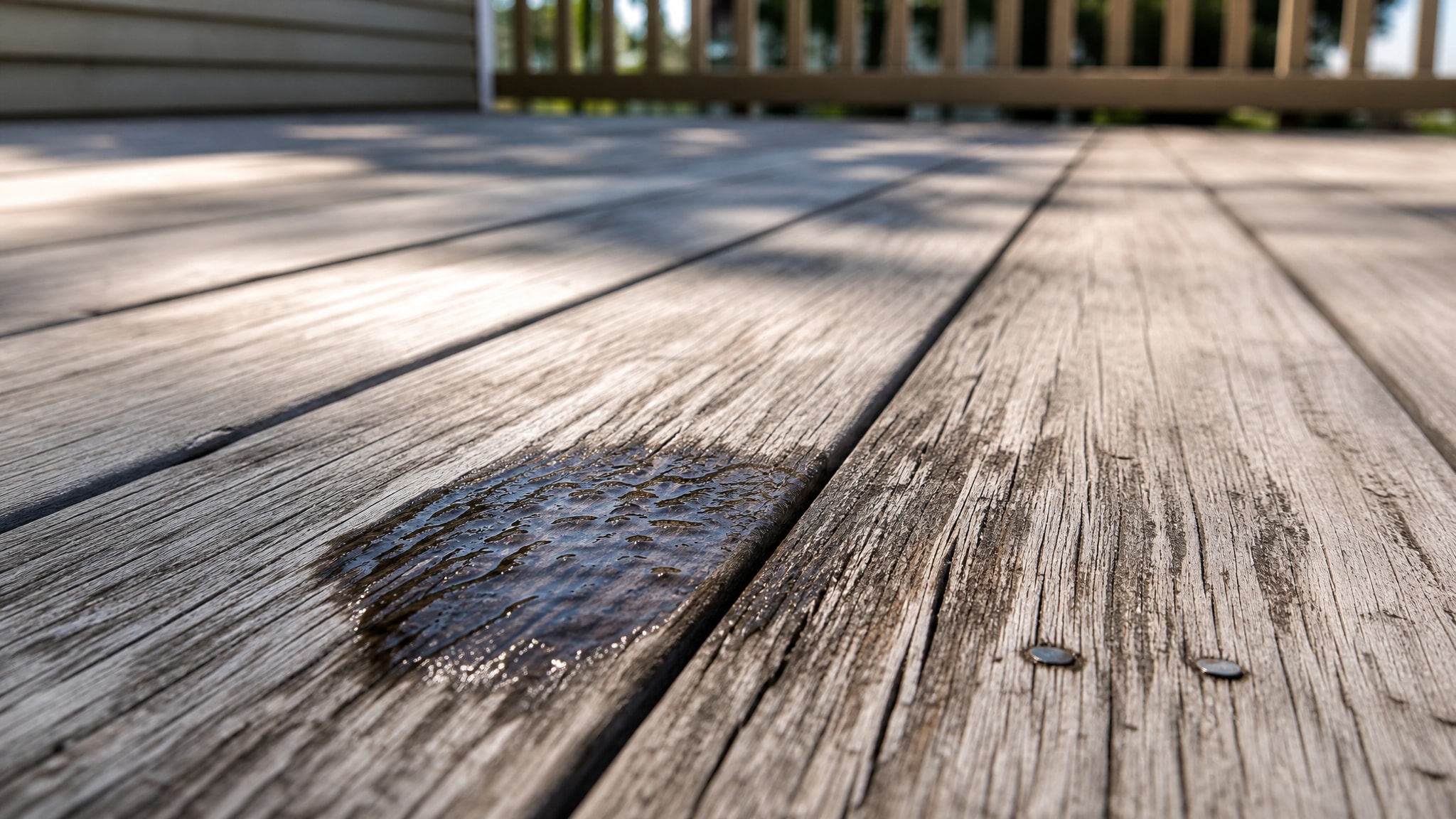
The most reliable test for failing sealant takes nothing more than a glass of water and five minutes on a dry afternoon. In Florida’s humidity, water that soaks into deck boards within minutes during this test means the protective barrier has failed.
How to Perform a Simple Water Test
Pour a small amount of water onto several spots on your deck, including high-traffic zones and areas that get direct afternoon sun. If the water forms tight beads sitting on top of the wood, the stain is still repelling moisture. If it darkens the wood and absorbs within two to three minutes, the protective layer has worn through and the fibers are exposed.
Why Absorption Signals Urgent Deck Maintenance
Unsealed wood acts like a sponge during Southwest Florida’s frequent rainstorms, drawing moisture deep into the grain where it promotes decay from the inside out. This failure often shows up months before any visible rot or structural damage. Treat immediate water absorption as a signal to schedule a professional evaluation before the next heavy weather cycle arrives.
Faded Deck Wood and Uneven Coloration
Color loss is the most visible of the deck maintenance signs, but not every shade change means the coating has stopped working. Licensed painting contractors in Venice, FL say UV degradation and salt air cause stain failure faster here than in most U.S. regions, which is why they emphasize annual inspections.
Distinguishing UV Damage from Normal Aging
Intense Gulf Coast sunlight breaks down both stain pigments and the lignin in wood itself, turning unprotected boards silvery gray over time. Some gradual lightening is normal, especially on south-facing surfaces that take the brunt of the sun. But when faded deck wood feels chalky or powdery rather than just lighter in tone, the binder holding the pigment together has broken down and moisture protection is gone.
When Fading Indicates Coating Failure
Uneven coloration across the deck surface usually points to inconsistent past application or localized wear that spot repairs can’t fix. Areas under eaves may hold their color while exposed sections turn gray, creating a patchy look that calls for full restaining rather than touch-ups. Choosing the right product matters at this stage. Understanding the best deck stain for Florida weather helps prevent premature fading after your next service.
Peeling, Flaking, or Cracking Stain
Peeling and flaking mean the coating can no longer bond to the wood, and that goes well beyond cosmetic concerns. These deck maintenance signs usually come from moisture trapped beneath the film or incompatible stain layers from previous refinishing attempts.
Film-forming stains that peel have to be stripped or heavily sanded before new product can adhere. Apply fresh stain over loose material and you only delay the failure. Solid-color stains and paints are especially prone to this in humid climates, where trapped moisture expands and contracts with temperature swings. Fifteen-plus years of servicing Venice-area homes shows that delaying restaining after visible peeling or mold appears often leads to costly wood replacement instead of a simple refinish.
Homeowners wondering whether they have paint or stain should check if the coating sits on top of the wood grain like a plastic film, or penetrates the fibers while leaving the texture visible. Painted surfaces that fail need different prep than stained ones, and misidentifying the existing finish wastes labor and materials.
Rough Texture, Splinters, and Mold Growth
Physical changes to the wood surface mean it’s been exposed to moisture too long without protection, and that creates both safety hazards and growth problems. Raised grain and splintering happen when unprotected wood fibers swell repeatedly in wet cycles and shrink in dry ones, eventually separating from the board.
Safety Hazards of Unsealed Wood
Splinters are a real injury risk for barefoot kids and pets, and rough textures make furniture placement awkward and wear down outdoor cushions faster. Splintered wood also creates entry points for insects and fungal organisms that speed up structural decay. Sanding and restaining fixes both the safety issue and the usability of your outdoor space.
Mold and Mildew as Moisture Indicators
Persistent black or green growth on deck boards means the wood holds enough moisture to support growth even between rain events. Surface mildew can sometimes be washed away, but mold that returns quickly after cleaning points to deeper saturation that washing alone won’t fix. A professional assessment determines whether the wood needs treatment beyond standard pressure washing before new stain goes on.
This kind of growth doesn’t respond to bleach solutions from the hardware store, because those products strip color without killing the root structures embedded in damp wood. Proper remediation calls for specialized cleaners and enough drying time that most homeowners can’t manage without commercial equipment and experience.
Determining When to Restain Your Deck in Florida
Decks in Southwest Florida typically need restaining every two to four years because of intense sun and frequent rainfall, well more often than the national average. Knowing the local timing factors helps you plan projects during good conditions instead of fighting weather that undermines adhesion and curing.
Seasonal Timing for Venice and Sarasota Homes
Spring and fall offer the most reliable windows for deck refinishing in this region, when temperatures stay between 50 and 90 degrees and afternoon thunderstorms are less predictable. Summer applications risk flash drying from extreme heat or washout from sudden storms. Winter projects face cooler nights that slow curing. Scheduling during the transitional seasons gives the stain time to penetrate and cure without weather getting in the way.
Factors That Accelerate Stain Wear
Salt air from the Gulf, constant UV exposure, and near-daily summer rains break down protective coatings faster than manufacturers’ general guidelines suggest. Decks facing south or west take more solar degradation, while decks near the coastline face extra chemical stress from airborne salt. Homeowners deciding between wood deck vs composite deck refinishing should know that natural wood demands stricter attention to these faster timelines.
Wait too long to restain, and the project moves past simple recoating into territory that needs extensive prep work or partial board replacement. The window between “needs attention” and “needs major repair” closes faster in Florida than in milder climates, which makes proactive scheduling the key to controlling cost.
Professional Deck Inspection vs. DIY Assessment
A homeowner’s visual check catches the obvious problems, but trained eyes find the hidden rot, fastener corrosion, and substructure issues that determine whether restaining will actually extend the deck’s life. A licensed contractor checks joist connections, ledger board integrity, and drainage patterns, all of which affect how long new stain performs regardless of product quality.
DIY assessments often miss moisture damage hidden beneath surface boards or around post bases, where water collects and rot begins out of sight. A professional evaluation also accounts for the surface prep a job needs, which varies by existing coating type, wood species, and current condition. Consulting licensed exterior painters near Venice gets you an accurate diagnosis tied to local building codes and climate realities, not generic internet advice.
Knowing how to hire a painting contractor protects you from unlicensed operators who cut corners on prep work or use products that don’t hold up on the Gulf Coast. Verified licensing and insurance give you recourse if something goes wrong, and fifteen-plus years of local experience means familiarity with the specific challenges Venice-area decks face year after year.
Frequently Asked Questions
How do I know when to restain a deck?
Perform a water bead test by pouring water on several areas of your deck; if it absorbs within two to three minutes instead of beading up, the protective barrier has failed. Combine this with visual inspection for graying, peeling, or mold growth to confirm restaining is needed. In Southwest Florida, plan for restaining every two to four years regardless of visible symptoms due to accelerated UV and moisture exposure.
How late is too late to stain a deck?
It becomes too late when structural rot has compromised joists, ledger boards, or support posts to the point where safety is affected rather than just surface appearance. Once wood is soft, punky, or crumbling beneath the surface, restaining will not restore integrity and board replacement or rebuilding is required. Catching problems during the peeling or mold stage typically still allows successful refinishing, but waiting until boards feel spongy underfoot crosses into replacement territory.
Do I need to remove all old stain before restaining a deck?
Complete removal is necessary only when the existing stain is peeling, flaking, or was applied as a film-forming solid color that has lost adhesion. Penetrating stains that have simply faded or worn thin can often be cleaned and recoated without stripping, provided the new product is compatible with what remains. A professional inspection determines whether stripping is required, since applying new stain over failing material guarantees premature failure of the fresh coat.
How can I tell if my deck is painted or stained?
Paint sits on top of the wood as an opaque film that hides grain texture entirely, while stain penetrates the fibers and leaves the natural wood grain visible even when tinted. Run your fingernail across the surface; paint feels smooth and plastic-like, whereas stained wood retains tactile texture and variation. Peeling paint comes off in sheets or chips, while failing stain typically flakes in smaller pieces or simply fades without lifting.