Hiring a painter involves more than comparing three bids and picking the middle number. A structured checklist for hiring a painting contractor protects your home from substandard work, liability gaps, and surprise change orders that inflate the final bill. Homeowners in Venice, Sarasota, and Manatee counties face environmental challenges that make vetting credentials even more important than in drier climates.
This guide walks through the verification steps, estimate details, and warning signs that separate professional contractors from risky hires. Pro Painting & Associates meets every criterion outlined here. It’s a licensed and insured contractor that has served this region for over 15 years.
Verify Florida Licensing and Insurance First
Florida law requires painters to hold specific credentials depending on the scope of work. Many homeowners skip this verification step because they assume a business card implies legitimacy. Confirm active status directly through state databases rather than accepting photocopies or verbal assurances from anyone bidding on your project. Unlicensed activity exposes you to financial risk if workers get injured on your property, or if defective work requires costly remediation later.
Checking State Credentials
Residential painting often falls under specialty contracting or home improvement regulations that vary by county and project value. The Florida Department of Business and Professional Regulation maintains a searchable license database where you can verify current status, check for complaints, and review disciplinary history before scheduling an estimate. A valid license number should appear on all proposals, contracts, and vehicles, not buried in fine print.
Confirming Adequate Coverage
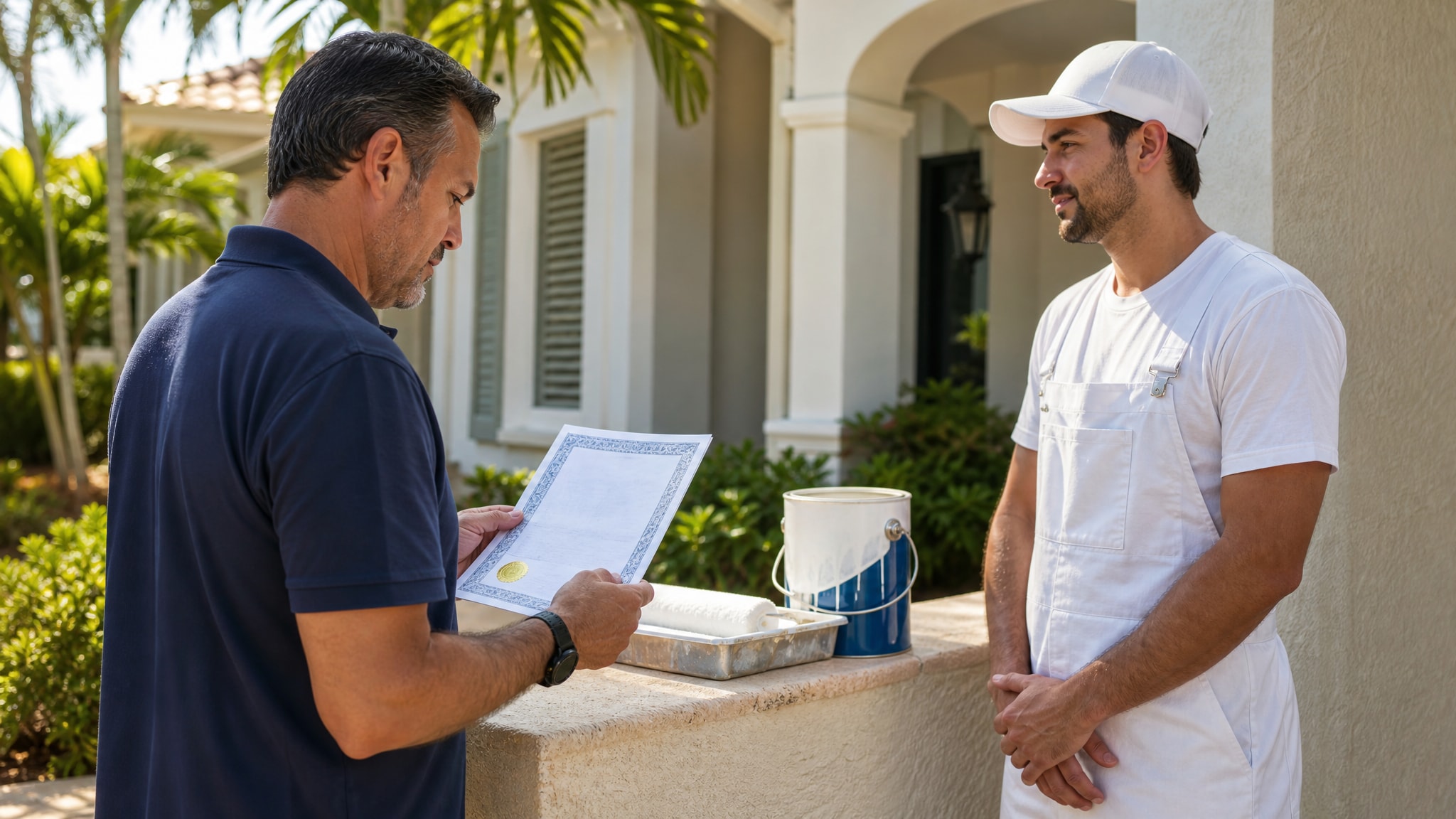
Insurance protects both parties when accidents happen during preparation, application, or cleanup. Request certificates of insurance naming you as additionally insured for general liability and workers’ compensation before work begins. General liability covers property damage like paint spills on flooring or siding damage during pressure washing. Workers’ compensation shields you from medical bills if a crew member falls from a ladder on your property.
A certificate expiring mid-project creates a coverage gap that leaves you exposed.
Essential Questions to Ask a Painting Contractor Before Signing
The questions you ask a painting contractor reveal operational maturity far better than polished marketing materials or friendly sales pitches. Prepared professionals answer with specific details about their processes, staffing, and quality control, without hesitation or vagueness. Contractors who deflect, offer generic responses, or seem annoyed by due diligence likely lack the systems a reliable project needs.
Who actually performs the work matters, because some companies subcontract labor to crews they don’t directly employ or supervise daily. Ask whether workers are W-2 staff covered under company insurance and workers’ compensation, or independent contractors carrying their own policies. Direct employment typically means greater oversight, consistent training, and accountability when issues arise during your project.
Surface preparation determines how long the paint job lasts more than brand or color ever will. Request a written description of prep steps, including washing, scraping, sanding, caulking, priming, and repair work specific to your home’s condition. Vague promises to “prep properly,” without itemized steps, leave room for corner-cutting that shows up as peeling, blistering, or premature failure within months.
Project timelines affect your daily routine and your exposure to weather during exterior work. Ask for start and completion dates with built-in contingencies for rain delays, common in Southwest Florida summers. Professional contractors build in buffer days and communicate proactively when weather forces adjustments, rather than disappearing or showing up unpredictably.
Reviewing the Painting Estimate Checklist for Accuracy
A detailed painting estimate prevents disputes by documenting exactly what you’re buying before work starts. Line-item breakdowns should specify surface areas, preparation methods, primer types, finish coats, and material brands, rather than lump-sum pricing that hides omissions. Ambiguous estimates invite change orders later, when contractors claim certain tasks were “not included” despite your reasonable expectations.
Material specifications eliminate substitution surprises that compromise durability or appearance. The estimate should name exact paint products, sheens, primers, caulks, and sealants planned for each surface type. Substituting lower-grade materials without approval undermines performance. That matters most in coastal environments, where UV resistance and moisture protection count.
Exclusions deserve equal attention, because they define what the contractor will not handle. Items like rotten wood replacement, stucco repair, window glazing, or furniture moving should appear explicitly if they’re outside scope. Knowing the boundaries upfront lets you arrange separate trades, or negotiate inclusion, before signing rather than discovering gaps after deposits change hands.
Payment schedules tied to milestones protect both parties throughout the project. Avoid contractors demanding full payment upfront, or deposits that exceed industry norms for residential work. Reasonable structures link payments to completed phases, like preparation, priming, and final coat inspection, with retainage held until punch list items are resolved.
Common Painting Contractor Red Flags to Avoid
Recognizing red flags early saves money, time, and frustration that no warranty can fully fix afterward. These warning signs cluster around communication patterns, documentation practices, and pricing anomalies that depart from professional norms. Trust your instincts when something feels off during initial interactions. Small issues during estimation often grow larger during execution.
Pressure tactics signal desperation or dishonesty, not confidence in fair value. Limited-time discounts, same-day signing bonuses, or claims about leftover paint from another job create artificial urgency that bypasses proper vetting. Reputable contractors maintain steady workflows and price based on actual costs plus reasonable margins, not manufactured scarcity.
Cash-only deals, or requests for checks payable to individuals rather than registered business entities, raise tax and legal concerns. Proper businesses provide invoices, accept traceable payment methods, and issue receipts for all transactions. Cash arrangements complicate dispute resolution and may point to unreported income or missing licensing.
Vague contracts lacking scope detail, timeline commitments, or warranty terms leave enforcement entirely dependent on goodwill. Oral agreements about extras, upgrades, or corrections rarely survive memory lapses or personnel changes mid-project. Insist on written documentation covering every material term before exchanging money or granting site access.
Unusually low bids often reflect omitted preparation steps, inferior materials, or uninsured labor rather than genuine efficiency. When one estimate undercuts others by thirty percent or more, ask what was left out rather than celebrating the apparent savings. The true cost shows up later, through premature repainting, damage repair, or hiring someone else to fix botched work.
Understanding Warranties and Workmanship Guarantees
Warranties provide recourse when failures occur, but their value depends entirely on enforceability and specificity. Distinguish between manufacturer warranties covering paint defects and contractor warranties addressing application errors, preparation failures, or adhesion problems. Manufacturer coverage becomes void if the application deviates from published specifications, which makes contractor accountability just as important.
Written warranty terms should define duration, covered conditions, exclusions, and claim procedures without ambiguity. Verbal promises about “standing behind our work” mean nothing when disputes arise months after final payment. Look for warranties that spell out remediation methods, response timeframes, and transferability, in case you plan to sell your home within the coverage period.
Workmanship guarantees show confidence in preparation and application standards beyond minimum code compliance. These commitments address issues like peeling, cracking, fading, or mildew growth caused by improper technique rather than product failure. Contractors offering multi-year workmanship warranties typically invest more in training, supervision, and quality control, because they bear the long-term cost of fixing their own mistakes.
Pro Painting & Associates backs residential projects with warranties built on fifteen years of local experience.
Why Local Experience Matters in Venice and Sarasota Counties
Southwest Florida’s climate puts stresses on a paint job that generic advice rarely addresses. Salt air speeds up corrosion on fasteners and metal fixtures, while intense UV radiation breaks down binders in exterior coatings faster than it does in northern markets. Humidity levels frequently exceed what’s needed for proper curing, which calls for careful scheduling and product choices that out-of-area contractors often get wrong.
Local contractors know which neighborhoods have deed restrictions governing colors, sheens, or approved vendors. They know which surfaces commonly hide moisture damage from past storms or irrigation overspray, damage that needs specialized treatment before painting. This regional knowledge prevents costly callbacks and keeps the job in line with community standards that could otherwise trigger fines or forced repainting.
Fifteen years of service in Venice, Sarasota, and Manatee counties means Pro Painting & Associates has painted homes across a wide range of architectural styles and microclimates. That experience informs material recommendations, preparation protocols, and timelines calibrated to local conditions rather than national averages. Hiring locally established contractors also supports businesses invested in community reputation and long-term customer relationships.
Frequently Asked Questions
How do I verify a Florida painting contractor’s license?
Search the Florida Department of Business and Professional Regulation license database using the contractor’s name or license number. Confirm the license is active, matches the work scope, and shows no unresolved complaints or disciplinary actions. Cross-reference the license number on their proposal, contract, and vehicle markings for consistency.
What insurance should a painting contractor carry?
Request certificates showing both general liability and workers’ compensation coverage with limits adequate for residential projects. Ask to be named as additionally insured on the general liability policy for the project duration. Verify coverage remains active throughout your project timeline rather than expiring mid-job.
Why is my painting estimate much lower than others?
Significantly lower bids often exclude essential preparation steps, specify inferior materials, or rely on uninsured subcontractors. Compare line items across estimates to identify missing scope rather than assuming equal value. The cheapest option frequently costs more long-term through premature failure or corrective work.
What should a painting warranty cover?
A strong warranty addresses workmanship failures like peeling, cracking, or adhesion loss separately from manufacturer paint defects. Terms should specify duration, covered conditions, exclusions, and claim procedures in writing rather than verbal promises. Multi-year workmanship coverage signals contractor confidence in preparation and application standards.