National painting guidelines often suggest a ten-year repaint cycle, but that timeline rarely applies to Gulf Coast properties. Intense solar radiation and salt spray degrade coatings much faster here than in temperate zones. Homeowners trying to figure out how often to repaint the exterior of a house in Florida need to account for local environmental stressors instead of relying on generic manufacturer estimates built for milder climates.
Typical Exterior Paint Lifespan in Florida Climates
The standard repaint schedule for Florida homes typically falls between five and seven years. UV intensity combined with coastal moisture breaks down paint binders faster than the national average allows. Pro Painting & Associates, drawing on more than 15 years serving Venice, FL homeowners, notes that Florida’s combination of UV intensity and salt spray often forces repainting every 5-7 years, well short of the 10-year national average.
Stucco and wood substrates respond differently to this environment, yet both need more frequent attention than inland properties get. Stucco generally holds paint for the full five-to-seven-year window when properly prepared. Wood siding or trim, because of its porosity and moisture absorption, often needs refinishing closer to the five-year mark.
Calendar dates alone won’t tell you when to repaint. Microclimates within Venice and Sarasota counties create real variance in how long a coating lasts, and a home exposed to prevailing gulf winds will age faster than one sheltered by mature landscaping or set further inland. That’s why regular visual inspections matter more than a fixed schedule.
Generic advice fails to capture these localized realities.
Key Factors That Shorten Paint Durability in Salt Air
Coastal proximity introduces chemical and mechanical stressors that change how exterior paint holds up over time. Salt air deposits microscopic saline crystals on the surface. Those crystals absorb moisture during humid nights and form a corrosive layer that works beneath the paint film, breaking adhesion from the substrate up.
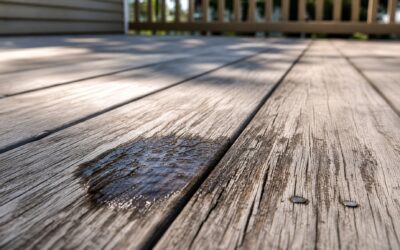
This process differs from simple inland humidity. Salt acts as a desiccant, pulling water vapor through semi-permeable paint layers even when the surface looks dry. The resulting osmotic pressure creates blisters and peeling that no amount of topcoat can prevent without addressing the underlying contamination during prep.
Thermal cycling adds to the chemical damage. Surfaces expand and contract between daytime heat and nighttime cooling, and paint films have to stay flexible enough to move with them. Many standard formulations turn brittle after prolonged UV exposure and lose their ability to bridge the gap between expanding stucco or wood fibers.
Wind-driven sand abrades the coating surface too, thinning the protective layer on windward elevations long before leeward walls show comparable wear.
Signs You Need to Repaint Your Florida Home Sooner
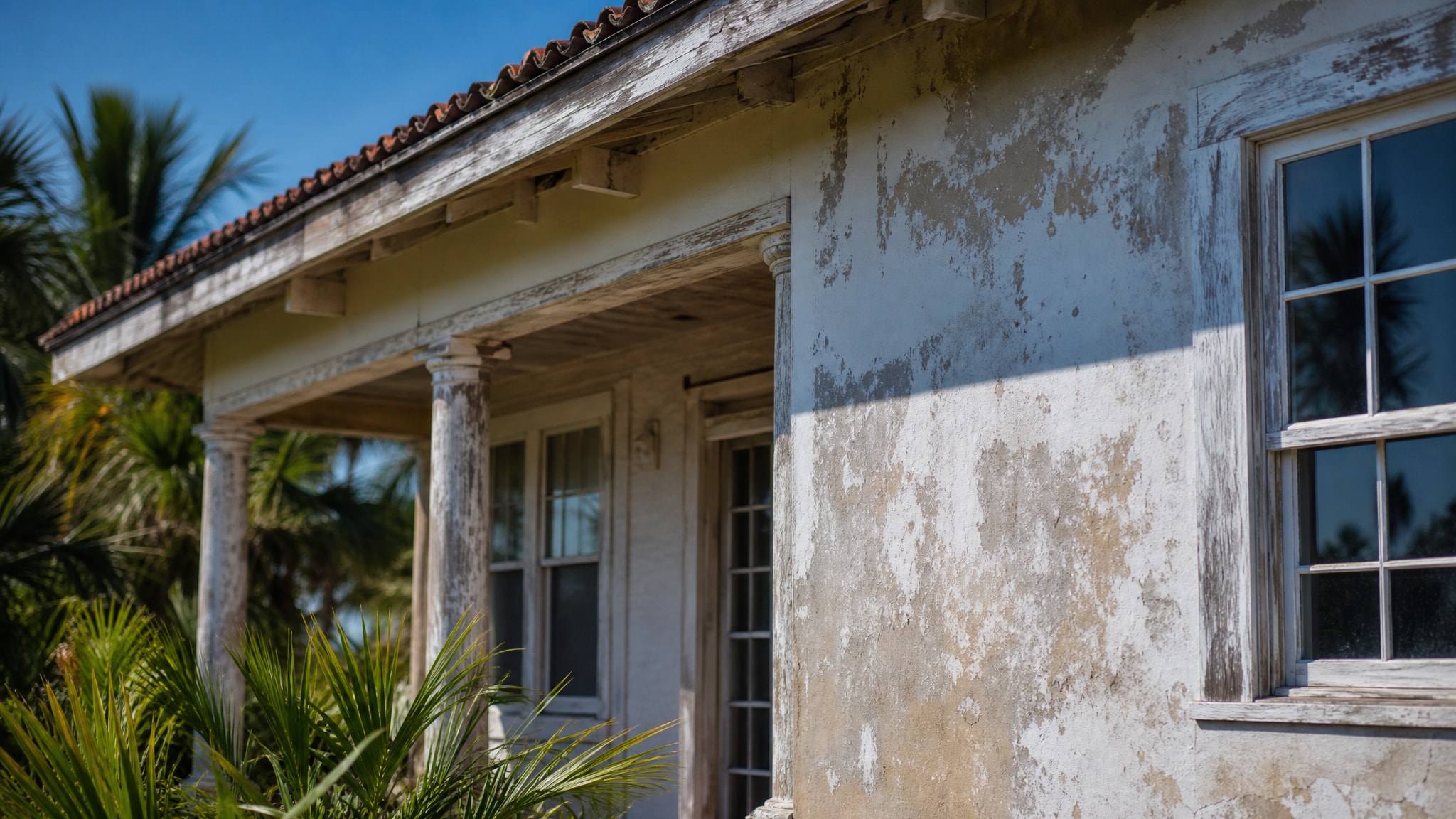
Visual indicators of paint failure are maintenance triggers, not just cosmetic concerns. They tell you the coating is losing its grip on your home’s structural integrity against water intrusion. Chalking is the most common early warning: a powdery residue on your hand when you touch the wall, meaning the binder has degraded and only loose pigment remains on the surface.
South and west-facing elevations in Venice frequently show chalking and fading years before north-facing walls do, because they take the direct afternoon sun. That directional wear pattern means your home may need spot treatment or full repainting on specific elevations while other sides stay serviceable. A professional assessment is the way to sort out which.
Mildew growth signals moisture trapped inside the paint film, not just surface dirt that washing can remove. Dark streaks or patches that return quickly after cleaning mean the coating has lost its mildewcide package and is now feeding biological growth that will eventually reach the substrate.
Peeling, bubbling, or alligatoring cracks reveal active adhesion failure that exposes bare material to rain and humidity. These signs demand quick attention, because water getting behind the paint film causes rot in wood framing and efflorescence in stucco, and both cost far more to fix than timely repainting would have.
Waiting until damage spreads increases restoration expenses fast.
Best Exterior Paint Types for Florida Humidity and Sun Exposure
Picking the right products for Gulf Coast conditions means understanding how different formulations respond to thermal expansion and UV degradation over years of exposure. Elastomeric coatings work well on stucco because their thick, rubber-like film bridges hairline cracks and moves with the substrate without tearing, though they need specific application techniques to avoid trapping moisture.
High-solids acrylic latex paints offer strong UV resistance and color retention for wood and fiber cement siding, while still letting trapped moisture escape. These formulations use higher concentrations of titanium dioxide and premium resins that resist chalking far longer than builder-grade alternatives, which is what justifies their higher upfront cost.
Your product choice largely decides whether you land at the upper or lower end of the repaint interval. Choosing the best exterior paint for Florida humidity means matching the coating’s permeability rating to your substrate and exposure, not just picking the most expensive option on the shelf.
Paint durability in salt air also depends on the right primer, one that addresses substrate alkalinity and tannin bleeding. Masonry primers with high pH tolerance prevent stucco burn-through, while stain-blocking oil-based primers seal wood knots and cedar tannins that would otherwise discolor waterborne topcoats within months.
No single product solves every challenge.
Why Proper Surface Preparation Extends Repaint Intervals
Surface prep matters more in Florida than in drier climates, because humidity and salt contamination create invisible barriers that block adhesion no matter how good the paint is. Pressure washing strips away visible dirt, but it also removes embedded salt crystals and chalked pigment that would otherwise sit as a weak layer between old and new coating.
Scraping and sanding clear loose material and feather rough edges, so new paint flows smoothly across transitions instead of creating ridges that trap water. This mechanical work also opens the substrate’s pores to accept primer, forming a bond that can resist the osmotic pressure Florida’s daily humidity cycles generate.
Priming is the insurance policy against early failure in a high-moisture environment. Spot-priming bare areas prevents flash rusting on fasteners and seals porous patches that would otherwise soak up topcoat unevenly. Full prime coats on previously unpainted surfaces set a uniform porosity, which is what gives you consistent color and sheen.
Pro Painting & Associates is a licensed and insured contractor that has served Sarasota and Manatee counties for over 15 years, and substrate prep is where that experience shows up most. It’s the difference between a professional result and a quick cover-up that looks fine at first and starts failing within two or three seasons, because shortcuts in prep work speed up degradation under Gulf Coast conditions.
Skipping preparation guarantees costly rework.
Hiring a Licensed Painting Contractor vs Handyman for Exteriors
The difference between hiring a licensed painting contractor and an unlicensed handyman matters for warranty protection, liability coverage, and how long the paint job actually lasts. Licensed contractors carry workers’ compensation and general liability insurance, which protects you if accidents happen on your property. Handymen operating without credentials leave you exposed to potential lawsuits and medical bills.
Accountability also covers building codes and manufacturer specifications that keep product warranties valid. Many premium paint manufacturers require documented proof of proper preparation and application before they’ll honor a warranty claim, and that’s documentation licensed professionals routinely provide but informal workers rarely keep.
You deserve to know who’s on your property and what recourse you have if something goes wrong after payment. The comparison of licensed painting contractor vs handyman walks through how to weigh bids on total value instead of hourly rate, since uninsured labor often ends up costing more in repairs than proper work would have cost upfront.
Pro Painting & Associates has served Venice homeowners for over 15 years, and full licensing and insurance have never been optional for the business.
Credentials verify capability.
Planning Your Next Exterior Painting Project in Venice
Scheduling inspections and getting estimates well before failure becomes visible lets you plan around seasonal weather and lock in a contractor while they still have room on the calendar. Peak storm season, June through November, brings unpredictable delays and emergency repair demands that compress schedules and narrow your options.
Budgeting accurately means knowing current market rates for professional exterior work in your area. Reviewing typical exterior house painting cost in Venice sets realistic expectations for what durable results actually cost, rather than going by outdated figures or national averages that ignore local labor and material prices.
Proactive planning means timing the repaint for weather windows where temperature and humidity support proper curing. Spring and fall typically offer the most stable conditions for exterior work in Southwest Florida, letting coatings dry at the right rate without blistering from heat or staying wet too long from evening dew.
Contacting exterior painters near Venice, FL for a free inspection gets you a current condition assessment tailored to your home’s exposure and substrate. A professional evaluation catches developing problems before they turn into structural damage, giving you time to budget and schedule work during good conditions instead of reacting to an emergency during peak demand.