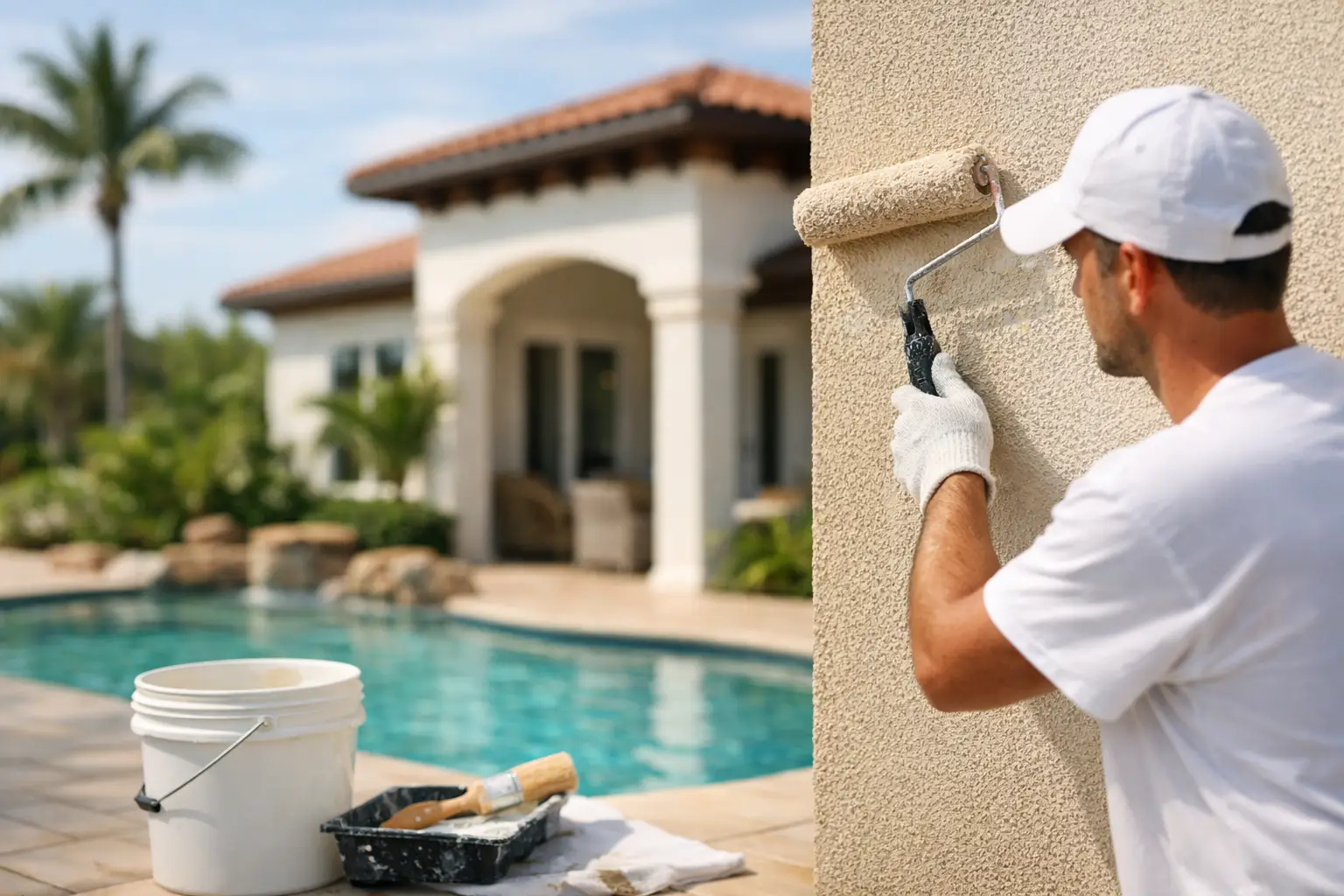
A faded stucco exterior can make an otherwise well-kept Florida home look neglected fast. More concerning, chalky paint, hairline cracks, mildew streaks, and peeling areas can allow moisture to work its way into the finish. Professional stucco painting does more than refresh color. Done correctly, it helps protect one of your home’s most visible and weather-exposed surfaces.
For homeowners in Venice, Sarasota, Bradenton, North Port, and nearby Gulf Coast communities, the quality of the preparation matters as much as the paint itself. Florida sun, humidity, wind-driven rain, salt air, and seasonal storms create conditions that demand more than a quick coat of exterior paint.
Why Florida Stucco Needs a Specialized Paint System
Stucco is durable, but it is not maintenance-free. Its textured, cement-based surface is porous by nature. Over time, it can absorb moisture, collect airborne dirt, develop mildew, and show fine cracking as the home naturally shifts or experiences repeated heating and cooling.
The right paint system gives stucco a clean, uniform appearance while helping manage those conditions. Quality exterior coatings are formulated to resist ultraviolet fading, hold up against moisture, and discourage mildew growth. However, even premium paint cannot compensate for poor surface preparation, unaddressed cracks, or paint applied to damp stucco.
This is why exterior painting should begin with an assessment of the entire surface, not a color swatch. A painter should look for chalking, failed caulk, cracks around windows and doors, damaged trim, water staining, peeling coatings, and areas where the stucco may need repair before painting starts.
The Preparation Behind Long-Lasting Stucco Painting
A lasting finish depends on creating a clean, stable surface for the new coating to bond to. On Southwest Florida homes, that process often begins with pressure washing to remove mildew, dirt, loose paint, and chalky residue. The pressure must be controlled carefully. Too much pressure can damage stucco, force water into openings, or worsen loose areas.
After cleaning, the surface needs enough time to dry. This is especially important during humid weather or after a period of rain. Painting over trapped moisture can lead to adhesion problems, blistering, or premature peeling.
Next comes repair work. Small hairline cracks may be treated with an appropriate flexible patching material or coating system, while larger cracks deserve closer attention. A crack that continues to grow, appears near structural openings, or is paired with interior damage may need evaluation beyond cosmetic repair. Painting can improve the appearance of minor cracking, but it should not be used to hide an active building issue.
Caulking around windows, doors, vents, trim, and other transitions is also essential. These joints are common places for water intrusion. A neat, flexible exterior-grade sealant helps create a cleaner finish and supports the overall weather resistance of the paint system.
Primer Is Not Always Optional
Bare stucco, repaired sections, heavily chalked surfaces, and areas with uneven absorption often benefit from a compatible masonry primer or conditioner. Primer helps stabilize the surface and creates a more consistent foundation for the finish coats.
Whether primer is needed depends on the condition of the home and the coating being used. A contractor who skips this conversation may be treating every stucco project the same way, even though a newer home with intact paint requires a different approach than an older exterior with widespread chalking or patch repairs.
Choosing the Right Paint for Stucco
Most residential stucco exteriors perform well with high-quality acrylic exterior paint designed for masonry. Acrylic coatings offer strong adhesion, flexibility, color retention, and resistance to Florida’s heat and humidity. They are also available in a wide range of colors and sheens.
Elastomeric coatings are another option, particularly when a surface has widespread fine cracking. These thicker, flexible coatings can bridge certain hairline cracks and provide added protection from wind-driven rain. Still, elastomeric paint is not automatically the best answer for every house. It must be applied at the proper thickness, on a suitable substrate, and with attention to moisture conditions. If the stucco has underlying moisture problems, sealing it beneath a heavy coating can create new issues.
Color selection matters in Florida, too. Deep, dark colors can create a striking look, but they absorb more heat and may show fading sooner on heavily exposed walls. Lighter and mid-tone colors generally stay cooler and can be a practical choice for homes with long hours of direct sun. Homeowners in communities with an HOA should also confirm approved color palettes before scheduling work.
For most stucco homes, a flat or low-sheen finish is preferred because it complements the texture and helps minimize the visibility of minor surface variations. Higher sheens can make imperfections more noticeable, especially on older walls.
Timing an Exterior Painting Project Around Florida Weather
Florida weather affects both scheduling and results. A good exterior painting crew watches the forecast, daily humidity, surface temperature, and the likelihood of afternoon storms. Paint should not be applied during rain, onto a wet surface, or when conditions fall outside the manufacturer’s recommended range.
That does not mean homeowners must wait for a perfectly dry season. Experienced local painters plan the work around changing conditions, begin on appropriate elevations, protect finished areas, and allow proper dry time between steps. Flexibility is part of doing exterior work responsibly along the Gulf Coast.
The condition of the home is usually a better guide than the calendar. If the color is noticeably faded, the paint rubs off as powder when touched, mildew keeps returning, caulk is failing, or cracks are becoming more visible, it is worth requesting an assessment before the damage expands.
What a Professional Stucco Painting Process Should Include
A clear process makes an exterior project easier to plan and easier to trust. At Pro Painting & Associates, the goal is to give homeowners straightforward recommendations based on the actual condition of their property, with no-obligation estimates and upfront pricing.
A properly managed project should include a detailed consultation, written scope of work, surface cleaning, repairs where needed, protection for landscaping and adjacent surfaces, primer when appropriate, and carefully applied finish coats. The crew should also keep the job site orderly and complete a final walkthrough so you can review the results before the project is considered complete.
Be cautious of estimates that focus only on the number of paint coats without explaining preparation. Two coats of quality paint on a poorly cleaned, cracked, or chalky surface will not perform like a complete prep-and-paint system. The lowest initial price can become more expensive if repainting is needed much sooner than expected.
Common Questions About Painting Stucco
How often should stucco be painted in Florida?
Many Florida stucco homes need repainting about every five to 10 years, but exposure makes a difference. A shaded home with a quality previous coating may last longer, while a home near the coast or in full sun may need attention sooner. Regular washing and prompt caulk or crack repairs can help extend the life of the finish.
Can you paint stucco with cracks?
Yes, minor hairline cracks can often be repaired before painting. Larger, recurring, or unusual cracks should be evaluated first. Painting over cracks without proper repair may improve the look temporarily, but the defect can reappear through the new coating.
Is pressure washing enough to prepare stucco?
No. Pressure washing is an important cleaning step, but preparation may also include mildew treatment, scraping loose paint, patching, caulking, priming, and dry-time management. The right scope depends on what the exterior reveals after cleaning.
Can stucco be painted a darker color?
It can, but darker colors absorb more heat and may require extra thought on highly exposed walls. A paint professional can help you balance the look you want with the home’s sun exposure, existing condition, and local community requirements.
A fresh exterior should make your home look cared for while giving its stucco the protection it needs for the seasons ahead. If you are seeing fading, cracks, peeling, or mildew, a careful on-site evaluation can clarify whether routine painting is enough or whether repairs should come first.