A wood fence takes more abuse than most parts of a house. It sits in direct sun all day, soaks up the summer rain and has nothing to shade it. Wood fence painting vs staining is the first decision most Venice homeowners face when the boards start to gray, and each finish ages in its own way.
Pro Painting & Associates has served Venice, FL for more than 15 years as a licensed and insured painting contractor. This guide explains how each finish behaves in Florida so you know what to request.
Which finish lasts longer in Florida: the short answer
Solid-color finishes, meaning paint or solid-color stain, usually go the longest between full services in Florida sun. Semi-transparent stain fades sooner, but it wears down gradually and is easier to refresh.
“Longer” can mean two things, and they point in different directions. One is how many years before the fence needs a full redo. The other is how painful that redo is when it comes. Paint tends to win the first measure, and stain tends to win the second.
A fence does not strictly need a finish. Bare boards still stand up, but they gray quickly and take on moisture faster, and that shortens the life of the wood itself. A finish is mostly protection against UV light, humidity and rain.
This is a comparison of finishes, not a guarantee. A fence with rot or loose posts needs repair first, and no finish fixes that.
Painting or staining a wood fence: how each finish works
The two products protect wood in different ways. Once you see the difference, the maintenance tradeoffs later in this guide make sense.
How paint sits on top of the boards
Paint builds a film on the surface of the wood. That film hides the grain and gives the fence a uniform, solid color. It also blocks a lot of UV light, which is why painted fences can hold their color so well in strong sun.
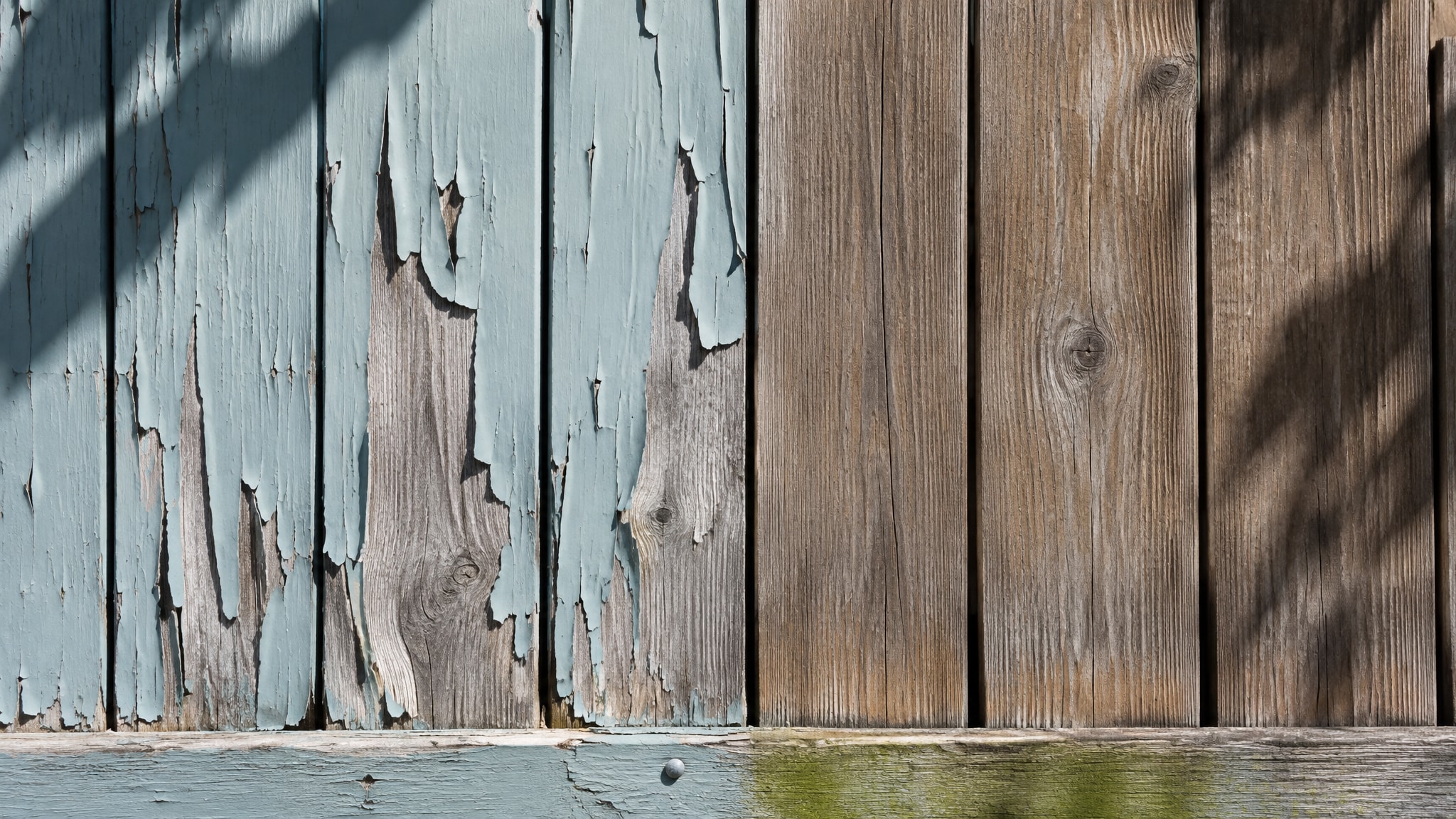
The film is also the weak point. If water gets behind it, or if the surface was not prepped well, the film can crack, blister and peel. Once peeling starts, it tends to spread.
How stain soaks into the wood
Stain works the opposite way. It penetrates the boards and colors the wood from within, so the grain and texture stay visible. There is no film to peel.
Because stain sits in the wood rather than on it, it wears down gradually. It fades and thins instead of flaking off. That makes a stained fence look weathered before it looks failed, which is easier to live with and easier to fix.
Fence finish options, from clear sealer to exterior paint
Fence finish options run along a scale of coverage. The more pigment a product carries, the more UV protection it gives, and the more of the wood’s natural look it hides.
- Clear sealer. It keeps the natural wood look and adds some water resistance. It offers little UV protection, so it tends to weather fastest in Florida sun. It suits a fence that gets mostly shade.
- Semi-transparent stain. It adds warm color and lets the grain show through. It suits newer boards with an attractive grain. Expect it to fade sooner than the options below, though it is the simplest to refresh.
- Solid-color stain. It hides more of the grain and behaves closer to paint. It gives stronger sun protection, and it suits older or mismatched boards that need an even color.
- Exterior paint. It gives the most coverage and the most uniform look. It suits a fence you want to match the house trim, or one with weathered boards you want to even out. It also depends the most on prep.
If you are weighing exterior paint, this look at exterior paints built for Florida humidity and sun covers what separates a good coating from a poor one in this climate.
How Florida sun, heat, and rain test each finish
Florida is hard on exterior finishes for four reasons: strong UV, heat, humidity and a long summer wet season. On coastal lots, salt air adds another layer of wear.
Dark colors make it worse. They absorb more heat, so a deep brown or black fence runs hotter than a light one, and the finish ages faster under it. If you want a dark fence, expect to maintain it more often.
Fence staining durability under Florida sun
Fence staining durability depends heavily on how much sun a board gets. In a typical backyard, the side facing the most direct afternoon sun fades or peels first, while the shaded side can look sound for much longer. One fence can need two different schedules.
Semi-transparent stain shows that wear in plain sight. It lightens and thins, and the wood underneath starts to gray. That is the signal to clean and recoat, and it arrives before the wood is truly unprotected. For more on how stains hold up in Florida weather, the deck guidance carries over well to fences.
Moisture behind the boards and why paint peels
Wood is always moving water in and out. Rain, humidity and ground moisture soak into the boards, and in the sun that water works its way back out. A paint film can lift when water moves through the wood behind it, because the film traps the moisture instead of letting it escape.
Experienced exterior painters generally point to moisture and poor preparation, not the paint itself, as the usual reasons fence paint lifts early. That is why drying and prep count for as much as the product, and why a fence that is still damp or dirty should not be painted no matter how good the paint is.
Maintenance over time: refreshing stain or repainting paint
Both finishes need upkeep, but the work looks different. A stained fence comes due more often. A painted fence comes due less often, but its repairs are bigger.
How often depends on the finish, the exposure and the prep. This overview of how often Florida exteriors need repainting gives useful context for the house, and the same logic applies to the fence.
Painted fence maintenance: spotting and fixing peeling
Painted fence maintenance is mostly about catching small problems before they spread. Walk the fence once or twice a year and look for lifting edges, hairline cracks and mildew, especially near the ground and along the sunny side.
Small spots can often be scraped, sanded, spot-primed and touched up. Widespread peeling is a different job, because new paint will not hold on top of a failing film. The loose paint has to be scraped or stripped back to sound film before recoating, and that takes time.
Your fence will not stay painted forever without this kind of attention. If the wood underneath stays wet, any new coat fails the same way the old one did.
Refreshing a stained fence that has grayed or thinned
A stained fence that has grayed or thinned is usually refreshed by cleaning, letting the boards dry and applying a new coat. There is generally no stripping step, because there is no film to remove.
That makes the work simpler and often less expensive per round, even though it comes around more often. If you are not sure whether your fence is due, these warning signs a Florida finish is due for a refresh are written for decks but apply to fence boards just as well.
Switching finishes and why prep matters most
Many homeowners inherit a fence that was finished one way and want it done the other way. Whether that works depends on which direction you are going.
Painting over stain, or staining over paint
Paint can often go over old stain, once the fence has been cleaned and sanded. The stain is in the wood rather than on it, so there is no film to fail underneath.
Stain does not work the other way around. It cannot soak into a paint film, so a painted fence that you want stained usually needs the paint stripped first. That is a lot of labor, so it is worth deciding carefully before you paint a fence that you might want to stain later.
Prep is the biggest factor in how long either finish lasts. That means cleaning off dirt and mildew, sanding or stripping where needed, and making sure the wood is dry. New pressure-treated boards need time to dry out before they take a finish well, and a painter should be able to tell you how they check.
Choosing the best finish for a wood fence in Florida
The best finish for a wood fence in Florida depends on the fence’s condition and exposure, not on which service a contractor happens to sell. Here is a rough way to think about it:
- Newer boards with good grain, and a fence you want to look natural: semi-transparent stain.
- Older boards, or a fence that needs an even color: solid-color stain or paint.
- A fence that bakes in afternoon sun: a solid-color finish in a lighter shade.
- A fence with moisture problems: fix the moisture first, then choose.
A good painter will look at your fence before recommending anything. If a contractor proposes one product without checking the boards, that is worth noticing.
Fence refinishing in Venice, FL: what to ask before you book
Fence refinishing in Venice, FL goes better when you ask a few direct questions before you sign. Ask any painter you are considering:
- What prep is included, and does it cover cleaning, sanding or stripping?
- How do you check that the wood is dry enough to finish?
- Which product type are you proposing, and why for this fence?
- Can I see proof of your license and insurance?
The answers tell you more than the price does. A homeowner checklist for hiring a painter covers the same ground in more detail.
Pro Painting & Associates is a licensed and insured contractor that has served Venice and the surrounding Sarasota and Manatee county areas for more than 15 years. Exterior painting and wood staining are among its residential services. To get a fence looked at, request an estimate from the exterior painters serving Venice, FL.
Frequently asked questions
Do you need to stain a fence?
No, a wood fence will stand without a finish. Bare boards gray quickly, though, and they take on moisture faster in Florida’s humidity and rain. A stain or paint slows that down and protects the wood from UV light.
What paint colors should I avoid for a fence?
Be careful with very dark colors. They absorb more heat in Florida sun, so the finish tends to age faster, especially on the side that gets the most afternoon sun. A lighter shade usually gives a longer-lasting result.
How do you stain a fence with a brush?
Clean the fence and let the boards dry fully first. Then brush the stain on in sections, working with the grain and pushing it into the wood, and wipe up drips or puddles before they dry. Follow the product label for coats and drying time.
Can you paint over a stained wooden fence?
Often, yes. The fence usually needs to be cleaned and sanded first, because paint needs a sound, clean surface to grip. Going the other way is harder, since stain cannot soak into old paint and the paint generally has to be stripped first.