Choosing a paint color for a Florida home takes more than matching swatches to furniture or following national design magazines. Gulf Coast sun and humidity change how pigments look and hold up over time, so standard advice from cooler climates doesn’t translate well for homeowners in Venice, Sarasota, and Manatee counties. Picking the right interior paint color here means accounting for light, humidity, and finish durability, not just personal taste.
Pro Painting & Associates has advised Venice homeowners on color selection for over 15 years, factoring in local light patterns and humidity effects that generic guides overlook. That regional experience helps your choices work with the environment instead of against it, which means fewer repaints and fewer surprises once the paint dries.
Understanding Florida Light and Its Effect on Paint Color
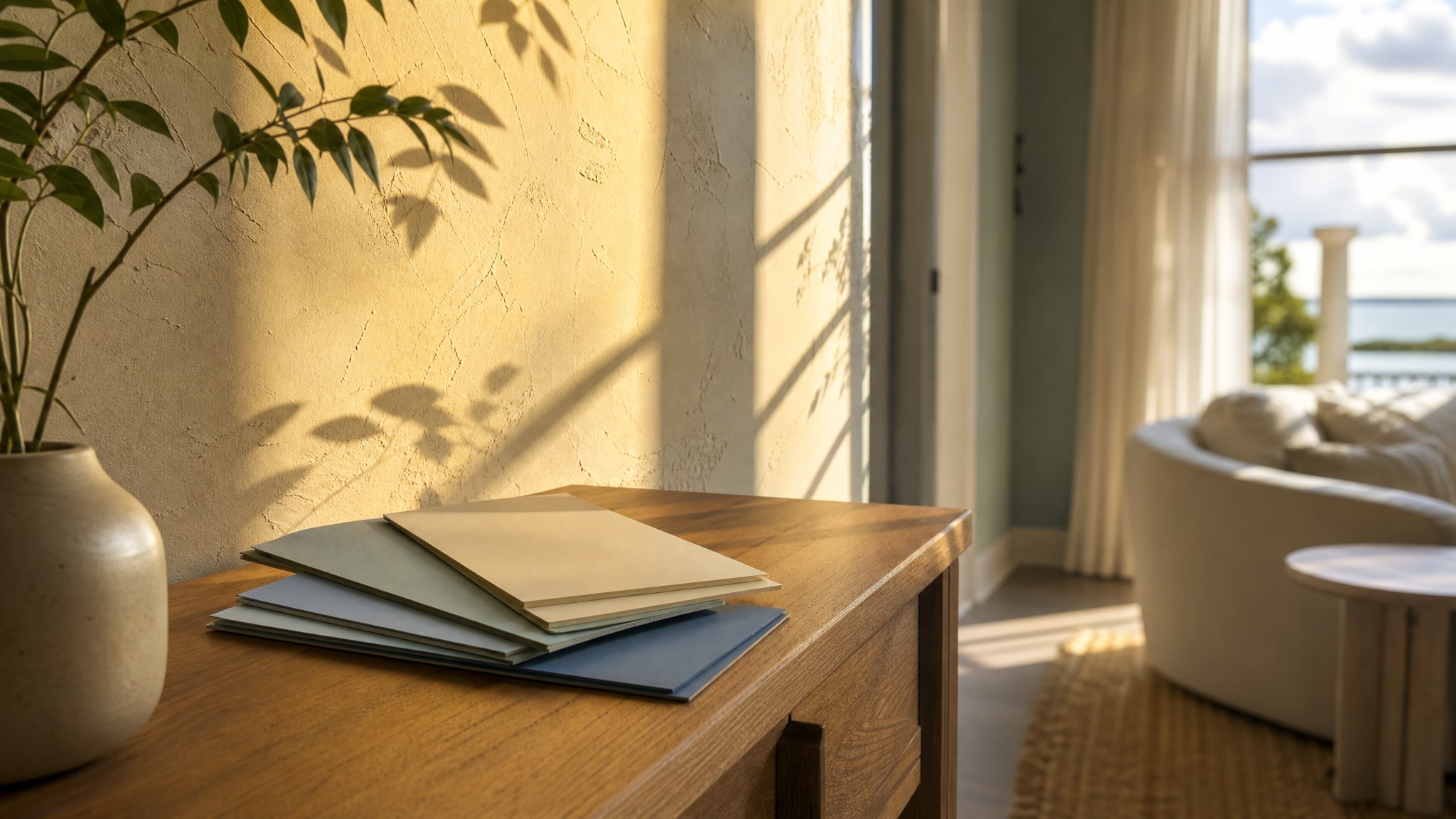
Florida’s natural light is both an asset and a challenge. The same wall can look completely different at noon than at sunset. Look at potential colors under real conditions in your home, not store lighting or digital previews, since neither can replicate the intensity of Gulf Coast sunshine.
How Natural Sunlight Shifts Hue Throughout the Day
Direct sunlight washes out pale tones and intensifies saturated ones. A soft blue that looked calm in the showroom can read as icy or stark by mid-afternoon. Warm undertones in beige or cream work the other way: they can amplify unexpectedly in direct rays, creating a yellow cast that feels overwhelming in rooms with large windows.
That shift is why morning-only evaluations mislead homeowners into committing to a shade before they’ve seen it at its worst. Professional painters recommend testing paint on at least two adjacent walls and watching it for 48 hours to see how it actually behaves under Florida’s changing daylight.
Accounting for Window Orientation in Venice and Sarasota Homes
Homes in Venice and Sarasota with west-facing windows often see warm whites shift toward yellow in late afternoon, a direct result of Gulf sunlight. North-facing rooms get steady but cooler indirect light, which can make grays look bluer and greens more muted; warmer base tones help balance that out.
South-facing rooms get the most consistent light all day, so colors read most accurately there, but that also means any undertone conflict between your paint and fixed elements like tile or cabinetry will show. East-facing spaces brighten fast in the morning and then fade into shadow, so colors need enough depth to avoid looking flat once the direct sun moves on.
Best Paint Colors for Florida Homes in 2026
Current color trends favor resilient, nature-inspired palettes that complement Florida’s brightness without feeling sterile. The best choices for Florida homes hold up visually across seasons and resist the faded, washed-out look that weaker formulations develop over time.
Coastal Neutrals That Resist Fading Perception
Sandy taupes, weathered grays, and soft greiges make versatile backdrops that absorb rather than reflect harsh light, so they keep their character even at peak summer brightness. These neutrals sidestep the pink or green undertones that can emerge unpredictably in coastal light, which gives them more stability than pure whites or trend-driven pastels.
They also coordinate well with the natural materials common in regional architecture, from travertine floors to lanai stonework. Sheen matters just as much as color here: too much gloss can introduce shine that fights the matte, calm look these neutrals are meant to create.
Warm Whites and Soft Greens for Humid Climates
Warm whites with a hint of yellow or red counter the coolness of air-conditioned interiors without the antiseptic feel pure white can have in sun-drenched rooms. Soft sage, seafoam, and mossy greens tie indoor spaces to the landscape outside, offering some visual relief from the heat without giving up sophistication.
These hues also feel less damp or institutional in humid rooms than crisp blues or stark grays can. They pair well with the wood tones and woven textures common in Florida interiors, which helps a room feel like it belongs here rather than imported from somewhere else.
Choosing Paint Sheen for Humidity and High-Traffic Areas
Interior paint in high-humidity zones like Florida typically needs a satin or semi-gloss finish in wet areas to prevent mildew and keep the paint adhered properly. Getting the sheen right protects your investment as much as the color choice does, since the wrong finish fails early no matter how good the pigment is.
Eggshell vs. Satin: Balancing Cleanability and Glare
Eggshell has a soft, velvety look that cuts glare in living rooms and bedrooms with big windows, but it doesn’t wipe clean as easily in households with kids or pets. Satin cleans up better and resists moisture, which suits hallways, playrooms, and dining areas, though its slight shine can draw attention to wall imperfections in raking light.
Save flat or matte finishes for ceilings or low-traffic adult spaces, where cleaning demands are minimal and glare control matters more. The right sheen changes room by room, so painting the whole house one finish rarely serves a Florida home well.
Moisture-Resistant Finishes for Bathrooms and Kitchens
Bathrooms need semi-gloss or specialized kitchen-and-bath formulas that form a tighter surface film, resistant to condensation and steam. Kitchens do best with satin or semi-gloss near cooking surfaces and sinks, where grease and frequent wiping would wear down eggshell within months.
Cabinets need even tougher finishes to handle daily use and cleaning chemicals. That’s why cabinet refinishing coordination often calls for conversion varnishes or catalyzed lacquers rather than standard wall paint. Skip these distinctions and no amount of color correction fixes the failure that follows.
Testing Paint Samples Like a Professional Painter
Peel-and-stick samples or large painted swatches give more accurate results than small chips, especially in Florida’s variable light, where context shapes perception. Apply sample paint directly to the wall in at least two-foot squares. That shows how texture, substrate, and existing trim interact with the color in a way paper swatches never can.
Watch the samples over several days to account for weather shifts and changes in artificial light between your first look and your final decision. Morning fog, afternoon thunderstorms, and evening lamp warmth all change how a color reads, so one viewing window won’t tell you the whole story.
Digital renderings and store displays can’t substitute for seeing paint on your actual walls, because they miss the dimensional reality of your specific space. Skipping this step is the most common reason homeowners regret their color choice after the painters have already finished.
Common Mistakes When Picking Interior Paint Colors
Relying only on digital renderings or store lighting tends to disappoint once the paint goes up in real home conditions, where natural light dominates. Store fluorescents lack the UV spectrum and intensity of Florida sun, so colors look flatter and less reactive there than they will on your walls.
Ignoring existing fixed elements like tile, countertops, or cabinetry creates a disjointed room, where new paint fights the permanent investments instead of complementing them. Undertone clashes between warm stone and cool paint become obvious in full daylight, and fixing that after the fact gets expensive.
Picking color before choosing furnishings and textiles gets the order backward and limits your options once decor arrives. Paint should respond to the whole room, not dictate it in isolation.
When to Hire a Licensed Painting Contractor for Color Consultation
A licensed contractor who knows Florida homes understands how local light, humidity, and architecture interact with color in ways national brands don’t anticipate. That guidance cuts down on costly repaints and keeps your choices lined up with both looks and the demands of this climate.
Benefits of Local Expertise in Venice and Manatee Counties
Interior house painters in Sarasota deal with the same lighting and humidity cycles every day, which sharpens their instinct for what will actually work. They know which products hold up on local substrates and which fail despite what the manufacturer claims, so you don’t have to find out the expensive way.
That local knowledge extends past color into prep and application techniques that determine how long a paint job lasts, the same principles covered in exterior paint performance in Florida humidity apply indoors too. Licensing and insurance protect you if something goes wrong; an unlicensed operator leaves you holding the full cost of a bad outcome.
Color consultation from an experienced painter turns guesswork into a decision grounded in your home’s actual light and conditions. Have that conversation before you buy the paint, not after.