
Most homeowners know the deck needs staining long before they know what color it should be. This guide covers how to choose a deck stain color for a Florida home, in the order the decisions usually come up. It works as a wood stain color guide and stays on color and tone. For questions about which deck stains hold up in Florida weather, that guide covers durability and product choice.
If you are not sure the deck is ready for new color yet, read the signs your deck is due for restaining first.
Start With the Finish Your Deck Already Has
The finish on the deck today limits which colors you can choose tomorrow, so check it before you look at a single sample card. A see-through stain only looks even over bare wood or over a thin, worn stain that has soaked in.
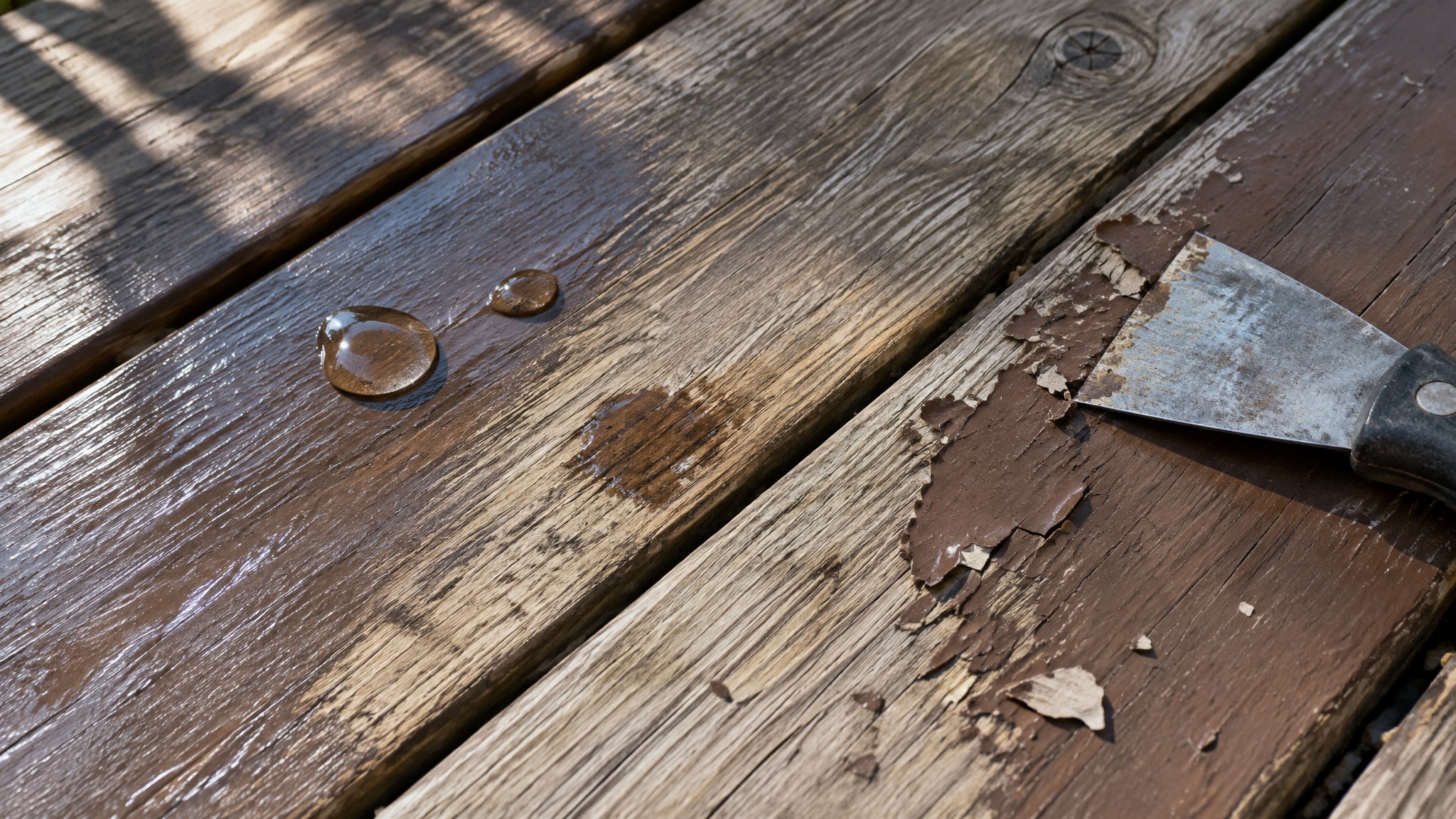
Two quick checks tell you what you have. Sprinkle a few drops of water on a clean, dry board. If the drops soak in and darken the wood within a few minutes, the surface is bare or carries a penetrating stain. If they bead up and sit on top, a film is still there.
Then look closely at the boards. Paint and solid stain leave an opaque layer that hides the grain, and when it fails it peels or flakes in chips instead of fading evenly. A penetrating stain just wears thin and lets the wood show through.
A deck that already carries paint or solid stain usually needs that film removed before a see-through stain will look even. Without that step, a semi-transparent stain will blotch, because it cannot soak through the old coating. This is why the current finish narrows your options from the start. A see-through stain cannot cover a film; it can only sit unevenly on top of one.
Solid vs. Semi-Transparent Deck Stain: How Much Wood Grain Shows
Opacity is usually the first real color decision. Each level shows a different share of the wood’s grain and base tone, and everything else follows from it.
There are three levels. A semi-transparent stain lets the grain and natural wood tone show under a light tint. A semi-solid stain mutes the grain but keeps some of the texture. A solid stain covers the grain and reads closer to paint.
Semi-Transparent Stain Keeps the Grain Visible
Choose semi-transparent if you like the look of real wood and the deck boards are in decent shape. The tint adds warmth or depth, but the wood still does most of the visual work. Knots, grain lines and the natural variation between boards all stay in view.
That also means the wood’s own color affects the result. The same stain looks different on cedar than on pressure-treated pine, and a board that started out yellow-green will not turn out the same as one that started out pale.
Semi-transparent tones also shift as they weather. The color you see in the first season is not quite the color you see in the third, and in Florida sun it usually softens and lightens over time. If you want the deck to age with the wood, that is part of the appeal.
Semi-solid sits in the middle. It suits a deck with some uneven boards or color variation that you want to quiet down without losing the texture of the wood.
Solid Stain Hides the Grain Under Color
Solid stain is the choice for a deck with patchy older boards, mismatched repairs or uneven color that a see-through tint would only highlight. It covers the grain and gives the deck one consistent color. Because it is a film, solid color holds steadier than a semi-transparent tint until the film itself begins to wear.
Solid stain does not suit everyone, and the trade-off is permanent in practice.
A solid-stained deck usually stays solid, because returning to a see-through look means removing the film. If you may want the natural wood look back someday, think twice before covering it.
Choosing a Deck Stain Color by Shade Family
Sample cards can run to dozens of names, and comparing them one by one gets confusing fast. It is easier to sort the deck stain shade options into three families and pick a family first. Those are warm and natural tones, cool gray and weathered tones, and bold colors.
Bold hues, such as deep reds, blues and greens, are generally sold as solid or semi-solid, so choosing one also settles the opacity question. Darker tones of any kind absorb more sun and run hotter underfoot, which matters on a barefoot Florida deck, especially one with no shade in the afternoon.
Narrow to one family, then compare two or three samples inside it.
Warm and Natural Tones
Warm and natural tones include honey, tan, cedar and medium brown. They sit closest to the look of fresh wood, which is why they pair easily with most siding colors and with the greenery common around Gulf Coast homes.
These tones suit semi-transparent and semi-solid stains well. They also forgive more than other families when the wood weathers, since a slight fade moves the color toward silver-brown rather than somewhere odd.
Cool Gray and Weathered Tones
Cool grays and weathered tones give a deck the look of driftwood or sun-bleached boards. They read modern and calm, and they work well beside white, cream or blue-gray houses.
One caution: gray is harder to judge from a card than brown. Undertones lean blue, green or brown depending on the wood and the light, so test it on your own boards. Lighter grays also stay cooler underfoot than deep charcoal.
Deck Refinishing Color Trends for 2026 and 2027
Popular picks for 2026 and 2027 commonly lean toward warm naturals and softened grays. Think honey and cedar tones on one side, and gentler, less stark grays on the other. This reflects current taste in the market, not verified sales data.
Use a trend to shorten your shortlist, not to decide the color. A fashionable gray that clashes with your roof will look wrong next to a house you live with every day, and fashion moves faster than a stain job does.
The deck should still look right in five years.
Matching Your Deck Stain to Your House Color
You should judge a deck stain against the whole exterior, not against the siding alone. The deck sits in the same view as everything else on the property, so a color that looks fine on a card can fight with the rest of the palette once it is on the boards.
Read the Siding, Trim, and Roof First
Walk around the house and list what the deck will sit beside. That includes the siding, the trim, the roof, and any stucco, brick or stone. Many homes in Sarasota and Manatee counties combine two or three of these, and each carries its own undertone.
A tan stucco wall and a gray roof, for example, pull in different directions, and the deck stain has to sit comfortably between them. Photograph the house in daylight and keep those photos handy when you compare samples.
If you are repainting the siding in the same season, settle that color first. Guidance on exterior paints built for Florida humidity and sun can help with that decision, and the deck color then follows from the finished house.
Match, Complement, or Stay Neutral
There are three approaches, and each gives a different result.
- Match. A same-family tone gives a seamless look. A warm brown deck beside warm tan siding blends the two so the house and deck read as one.
- Complement. A hue opposite on the color wheel makes the deck stand out. A blue-gray house with a warm honey deck is a common example. It adds contrast, but it works best when the other colors are quiet.
- Neutral. A neutral tone lets the house lead. Soft gray or mid-brown steps back and keeps attention on the architecture.
If you cannot decide, neutral is the safest of the three. It rarely competes with anything, which makes it the easiest to live with if you change the siding later.
Testing Samples in Florida Light
Florida’s bright sun and frequent rain both change how a stain looks, so a store chip tells you very little. Strong sun can make a stain read lighter and less rich than it did under shop lighting. A wet board, on the other hand, always looks deeper than a dry one.
A warm natural tone that looks rich on a board wet from rain can read noticeably lighter once the wood dries in full sun, so judge each sample both wet and dry. Check it outdoors, and check it more than once in the day, in morning light and again in late afternoon, when the sun is lower and warmer.
Test on a Scrap Board or Hidden Section
Apply a test patch to a scrap board or a hidden section of the deck, such as the underside of a stair tread or a spot under furniture. Use the same type of wood as the deck. New and weathered boards absorb stain differently, so a sample on fresh lumber will not predict how old boards turn out.
Let the patch dry fully before you judge it. Then hold it beside the siding and trim, because a store chip cannot show how the tone sits against the house.
The method is the same one behind the same sample-first approach used for interior paint. Only the light is different, and outdoors it changes more.
Keep the shortlist small. Two or three samples are enough, and more than that tends to blur the differences.
Getting a Deck Staining Quote in Venice, FL
A quote request goes more smoothly when you bring a few things with you: photos of the house, the color names of the siding and trim, and a short list of the samples you are considering. Those details let a contractor see the whole palette and talk about the deck’s finish and your color options with real information.
Pro Painting & Associates is a licensed and insured painting contractor that has served Venice, FL for over 15 years. The company handles interior and exterior painting, cabinet painting, deck painting and wood staining for residential customers. Its service area covers Venice and the surrounding Sarasota and Manatee county communities.
Homeowners in those areas can request a quote through the page for deck staining help in Venice, FL.
If you are comparing more than one contractor, a homeowner checklist for hiring a painting contractor lays out what to ask about licensing and insurance.
A quote will not choose the color for you. It gives you a clear picture of the deck’s condition and the work involved, so the color decision rests on facts.
Frequently asked questions
What is the difference between semi-solid and semi-transparent deck stain?
Semi-transparent stain lets the grain and natural wood tone show under a light tint. Semi-solid stain carries more pigment, so it mutes the grain while keeping some texture. Brands label these levels differently, so compare the opacity description on each can against a sample on your own boards instead of relying on the name alone.
Can I switch from a solid stain to a see-through stain later?
Not without removing the solid film first. A semi-transparent stain soaks into bare wood, and it cannot do that through an opaque coating, so it would look patchy. Going the other way is easier, since a solid stain can cover a worn see-through finish.
What are the trendy deck colors for 2026?
Warm naturals such as honey and cedar tones, and softened grays, are the popular picks. That reflects current taste, not measured sales data. Use the trend to narrow your choices, then let your house palette and sample tests decide.
How many stain samples should I test?
Two or three is enough. Pick one shade family first, then test a couple of colors from it on the same type of wood as your deck. Check them dry and wet, in morning and late-afternoon light, beside the siding and trim.