
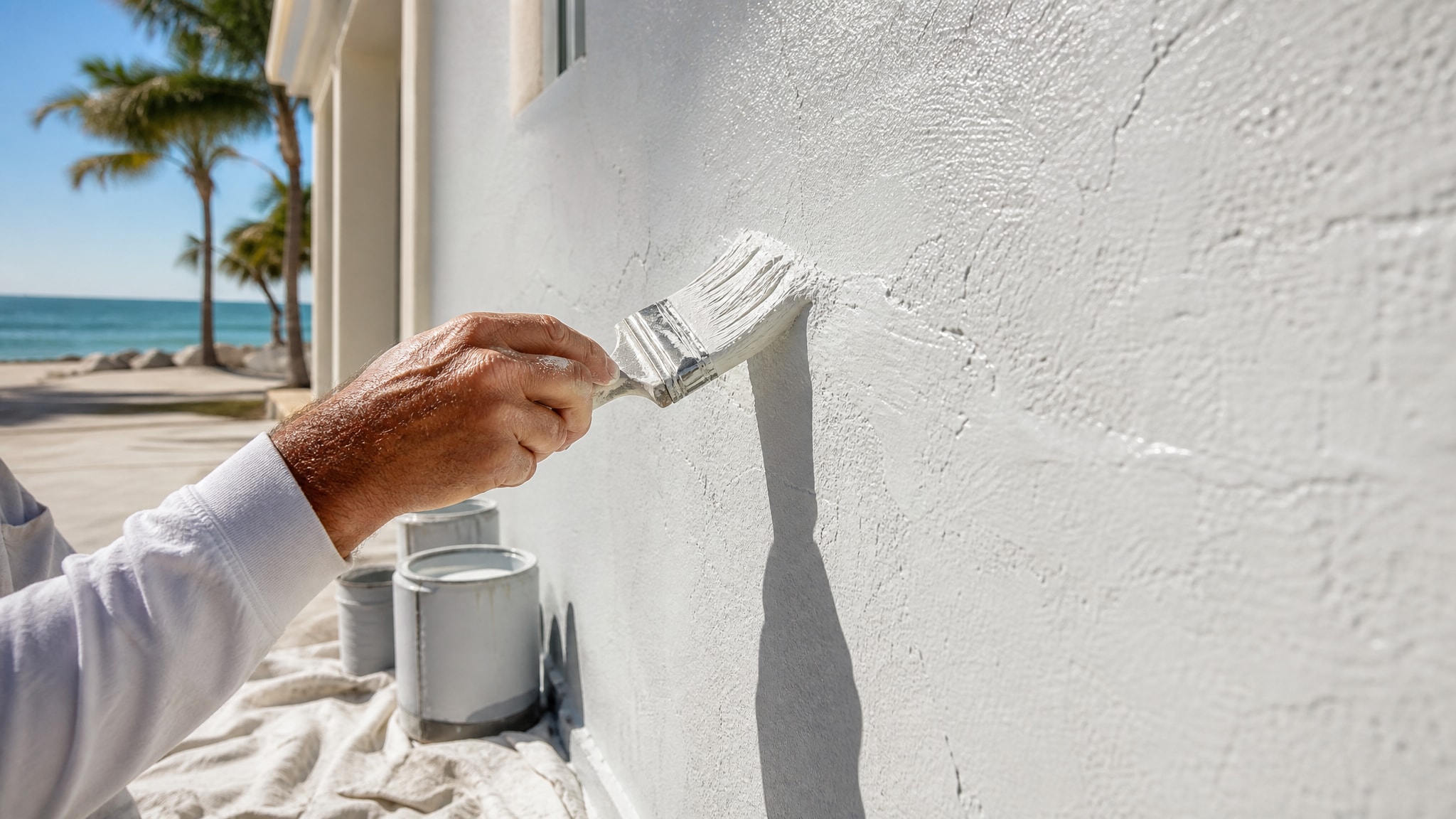
Finding a reliable exterior house painter near you in Venice, FL takes more than comparing bottom-line quotes. Coastal properties face environmental stressors that demand specific preparation methods and product knowledge to protect your investment long-term. Homeowners who check credentials and local track records, rather than chasing the lowest price, typically avoid costly rework and premature paint failure. Pro Painting & Associates has served Venice, FL homeowners for over 15 years with licensed and insured exterior painting services, and that history gives you the accountability a fly-by-night operator can’t offer.
Why Local Experience Matters for Exterior Painting
Coastal Florida’s salt-laden air and high UV index demand specialized primers and topcoats not always required in inland markets. A contractor who knows these conditions knows which coating systems resist chalking, fading, and adhesion loss on stucco, hardie board, and wood siding, the materials common throughout Sarasota and Manatee counties.
Understanding Florida’s Unique Climate Challenges
Exterior paint in this region fights three things at once: salt spray, intense ultraviolet radiation, and humidity that stalls proper curing if the timing is off. Standard acrylic latex made for temperate climates often fails within two or three seasons. It lacks the elastomeric stretch needed to bridge hairline cracks from thermal expansion and contraction.
Homes within one mile of the Gulf Coast typically need repainting two to three years sooner than homes farther inland, because salt corrosion speeds up the process. That makes product selection critical. Premium marine-grade coatings cost more upfront, but they last considerably longer when applied correctly to properly prepared surfaces.
Benefits of Hiring a Venice-Based Contractor
Local painters know neighborhood-specific building codes, HOA color restrictions, and the architectural styles common in communities like Casey Key, Nokomis, and downtown Venice. They also keep relationships with regional suppliers who stock products built for Gulf Coast conditions, not generic national-chain inventory optimized for volume sales.
You benefit from crews who know when afternoon thunderstorms tend to roll in during summer and can schedule around them to protect fresh coatings. That familiarity cuts weather-related delays and gives each coat time to dry properly before the next one goes on.
Verifying Licenses and Insurance Before Hiring
Florida law requires residential painting contractors to carry both general liability and workers’ compensation insurance to operate legally. Skip this check and you expose yourself to real financial risk if an accident happens on your property, or if substandard work needs to be redone by someone else.
What Proper Licensing Looks Like in Florida
Residential painting contractors must hold either a state-certified license or a county-issued occupational license, depending on their scope of work and business registration. A state-certified license allows work anywhere in Florida without extra local registration. A county license restricts operations to specific jurisdictions and may carry different bonding requirements.
Ask for the contractor’s license number and check it against the Florida Department of Business and Professional Regulation database before you sign anything. Active status confirms current compliance. An expired or revoked license signals problems with past performance or financial responsibility, and that should rule the contractor out.
Why General Liability and Workers’ Comp Are Non-Negotiable
General liability coverage protects your property against accidental damage during the project, things like overspray on vehicles, broken windows, or landscaping ruined by ladder placement. Without adequate limits, you could end up filing a claim against your own homeowner’s policy for damage the contractor caused, which can raise your premiums or trigger a coverage dispute.
Workers’ compensation insurance covers medical expenses and lost wages if a crew member gets hurt on your property, and it keeps that liability off your shoulders. A contractor working without this coverage creates real exposure: an injured worker can sue the property owner directly for negligence, and legal defense costs alone can exceed the entire project budget regardless of who was at fault.
This coverage doesn’t guarantee perfect results or erase every project risk. But it sets a baseline of professional accountability that an unlicensed operator can’t match.
Evaluating Craftsmanship Through Past Work and References
Portfolio photos show what a contractor can do on a good day. Only a direct conversation with a past client tells you how they handle things when a project doesn’t go to plan. A credible painter welcomes reference requests, because trust comes from actual conversations, not curated marketing photos.
What to Look for in a Portfolio
Recent projects in similar architectural styles and neighborhoods give you the most relevant read on a contractor’s experience. Stucco homes with decorative trim need different masking techniques and spray patterns than vertical board-and-batten siding does, so relevance matters more than raw job count.
Look for consistent quality across multiple angles and elevations, not just hero shots of the front facade. Detail photos showing clean caulk lines, uniform sheen transitions at cut-in points, and proper flashing around windows point to real attention during prep, not a cosmetic touch-up meant to impress during the sales pitch.
Questions to Ask Previous Clients
Ask specifically how long prep work took relative to the total project timeline. On a quality exterior repaint, surface prep typically eats up forty to sixty percent of labor hours. Clients who remember extensive pressure washing, scraping, priming, and caulking usually ended up with durable results. Clients who describe a quick start and a fast finish often saw premature peeling or blistering later.
Ask about how the contractor responded after final payment, once the small issues showed up. A contractor who honors warranty obligations and handles punch-list items promptly cares about their long-term reputation, not just closing the job, and that matters most once coastal weather starts testing the coating system months later.
Key Services Beyond Basic Exterior Painting
Many homeowners bundle multiple surface treatments into one exterior painting project, to keep protection levels consistent across every exposed wood and composite surface. Bundling these services often cuts mobilization costs and keeps color matching accurate across substrates that absorb stain and paint differently.
Deck Painting and Wood Staining for Coastal Homes
Deck surfaces take foot traffic, standing water, and direct sun that wear down standard exterior paint faster than vertical siding ever sees. Solid-color deck stains with UV inhibitors and mildewcides hold up better against traction wear and moisture than film-forming paints, which tend to peel under horizontal foot traffic.
Wood staining calls for different techniques than spray-applied siding paint, because how deep the product penetrates determines longevity, not surface film thickness. Back-brushing pushes product into grain openings and end cuts, where moisture causes rot, so hand-application still matters even when spraying speeds up coverage on large areas.
Cabinet Refinishing as Part of Whole-Home Updates
Interior cabinet refinishing pairs naturally with exterior painting for homeowners who want one color scheme flowing from indoors to outdoors. Kitchen and bathroom cabinets take grease, steam, and constant cleaning, and that means specialized bonding primers and catalyzed topcoats you won’t find in standard wall paint.
Proper cabinet refinishing means degreasing, sanding, priming, and several thin coats, not one heavy coat that drips or sags on a vertical door panel. The process takes longer than most homeowners expect, but rushing it leaves visible brush marks and weak adhesion that undercuts the whole renovation.
What to Expect During the Estimate Process
A thorough estimate covers surface inspection, prep scope, product specifications, and a detailed timeline, not just a bottom-line number. Painters in Venice typically hand over written proposals that break down labor, materials, and warranty terms so you can see exactly what’s driving the price.
A professional estimator measures square footage accurately, notes existing substrate conditions, flags areas needing extra repair, and names exact products and sheens rather than vague phrases like “premium exterior paint.” That level of detail lets you compare bids apples-to-apples and avoids change orders caused by fuzzy scope.
Expect the estimator to walk through access challenges, landscaping protection, and scheduling constraints that affect labor and material logistics. Those operational details separate a real proposal from a rough guess that balloons once work starts and hidden conditions turn up.
Preparing Your Home Before the Painter Arrives
You can speed the project along by trimming vegetation, moving outdoor furniture, and securing pets before the crew shows up. Clear access to every exterior wall cuts prep time and helps prevent damage to landscaping or personal property while the crew sets up and works.
Remove window screens, shutters, and any removable light fixtures yourself if you can. Letting the contractor handle them raises liability exposure and may void a manufacturer’s warranty on delicate parts. Label everything and store hardware in sealed bags taped to the matching item, so nothing gets lost in the middle of active construction.
Talk through irrigation schedules, security codes, and any neighbor concerns before the crew arrives, not after a conflict comes up. Early coordination heads off water damage to fresh paint, false alarms, and friction with the people next door.
Maintaining Your Fresh Exterior Paint Job
Regular rinsing with low-pressure water clears the salt and mildew buildup that shortens paint life along the coast. Annual cleaning keeps biological growth from working into the coating film, which causes discoloration and adhesion failure that no amount of spot-touching can fix.
Scheduling touch-ups every few years on sun-exposed walls stretches the interval between full repaints and keeps curb appeal steady. South- and west-facing walls fade fastest from direct afternoon sun, so staying ahead of maintenance on those walls stops small failures from spreading across the whole house.
Keep a record of the product names, colors, and sheens used on the original job, so future touch-ups match exactly. Having that on hand saves guesswork and avoids the patchy look that undoes the professional finish you paid for.