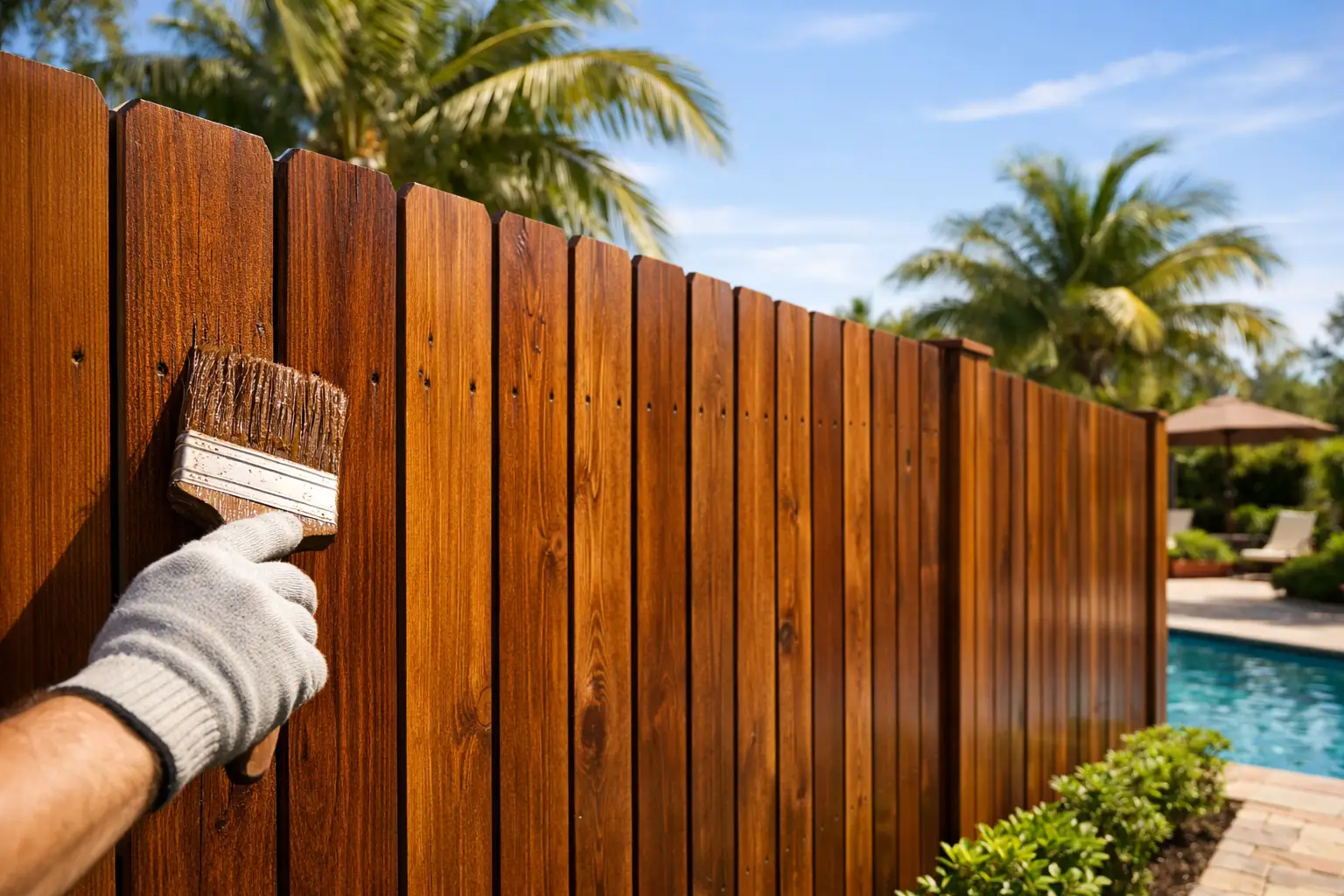
A new wood fence can lose its warm, finished look quickly on the Gulf Coast. Strong sun bleaches exposed boards, afternoon rain drives moisture into the grain, and humid conditions encourage mildew in shaded areas. For wood fence staining Florida homeowners can rely on, the stain itself matters, but preparation, product selection, and weather timing matter just as much.
A properly stained fence does more than improve curb appeal. It slows moisture absorption, helps reduce UV damage, and makes future cleaning and maintenance more manageable. The goal is not to make wood maintenance-free. It is to give the fence a durable, even protective system that fits Southwest Florida conditions.
Why Florida Fences Need More Than a Quick Coat
Florida weather puts exterior wood through repeated expansion and contraction. Heat dries boards, rain reintroduces moisture, and ultraviolet exposure gradually breaks down the natural wood fibers. Near Venice, Sarasota, Siesta Key, and other coastal communities, salt air can add another layer of wear.
That cycle is why a fence may look faded, blotchy, or weathered even when it is still structurally sound. A quality stain helps limit the damage, but only when it can penetrate and bond correctly. Applying a premium product over dirt, mildew, old failing coatings, or damp wood may produce a better color for a short time, but it will not provide the protection homeowners expect.
The fence material also affects the approach. Pressure-treated pine is common and affordable, but it needs time to dry after installation before it is stained. Cedar has natural oils and a distinctive grain, yet it still needs protection from sun and moisture. Older fences may need cleaning, brightening, minor board repairs, or selective sanding before any stain is applied.
Choosing the Right Fence Stain for Florida Conditions
There is no single best stain for every fence. The right choice depends on the wood species, the fence’s current condition, how much sun it receives, and the appearance you want to maintain.
Transparent and Semi-Transparent Stains
Transparent and semi-transparent stains allow more of the wood grain to show through. They are a popular choice for newer cedar or pine fencing when homeowners want a natural finish rather than a painted appearance.
The trade-off is UV protection. Lighter, more transparent products generally provide less pigment, and pigment is what helps shield wood from direct sunlight. They can look excellent, but a fence in full Gulf Coast sun may need maintenance sooner than one finished with a more heavily pigmented stain.
Semi-Solid Stains
Semi-solid stain provides richer color and stronger sun protection while still retaining some texture from the wood. It can be a practical middle ground for fences with uneven coloring, minor weathering, or grain variation that homeowners do not want to highlight.
This finish is often a smart option for a fence that is no longer brand-new but does not need the fully opaque appearance of paint. It also offers more flexibility when matching a fence to exterior trim, decking, or landscaping.
Solid Stains
Solid stain covers most of the wood grain and produces a more uniform color. It is useful when a fence has significant discoloration, repaired sections, or old stain that cannot be fully removed without extensive work.
A solid stain can deliver strong UV protection and a clean, consistent look. However, surface preparation is especially important. Because it forms more of a film on the wood, poor adhesion can lead to peeling or early failure. It should never be used as a shortcut over loose material, mildew, or moisture problems.
Preparation Determines How Long the Finish Lasts
The difference between a stain job that lasts and one that disappoints often comes down to the work completed before staining begins. Proper preparation is not glamorous, but it is where durability starts.
First, the fence should be inspected for loose boards, popped fasteners, rot, warping, and areas where sprinklers regularly soak the wood. Damaged boards should be repaired or replaced before staining. Stain can improve appearance and slow weathering, but it cannot restore wood that has already deteriorated beyond repair.
Next comes cleaning. Florida fences commonly collect pollen, dirt, mildew, algae, and residue from prior coatings. A controlled pressure-washing process can remove surface contamination without damaging the wood fibers. Excessive pressure can scar softer wood, create fuzzy grain, and force water too deeply into the boards, so more pressure is not always better.
After cleaning, the wood needs adequate drying time. This is one of the most overlooked parts of wood fence staining in Florida. A fence can look dry on the surface while holding moisture below. Applying stain too early can interfere with penetration and adhesion, especially after heavy rain or pressure washing.
Some fences also benefit from sanding. Light sanding can smooth raised grain, remove loose old coating, and help create a more even finish. It is particularly valuable on handrails, gates, and highly visible sections where rough wood or previous stain failure is noticeable.
Timing Matters in Southwest Florida
Weather conditions affect both the application process and the cure. High humidity, direct heat, incoming rain, and heavy morning dew can all change how a stain performs.
A hot, cloudless afternoon may seem ideal, but direct sun can cause stain to dry too quickly and create lap marks or uneven absorption. On the other hand, staining shortly before rain can wash away or compromise a finish before it has time to set. The best application window depends on the product specifications, the fence exposure, and the current forecast.
Seasonal planning helps. Many homeowners schedule fence staining during drier stretches when there is more reliable time for cleaning, drying, preparation, and application. That does not mean staining cannot be completed during Florida’s wetter months. It simply requires closer weather monitoring and a contractor who will not rush the process to meet a calendar date.
Common Mistakes That Shorten a Fence Stain’s Life
A fence may fail early for reasons that are easy to avoid. The most common issue is staining wood that is dirty or still damp. Another is applying a new finish over a peeling or incompatible prior coating without proper removal or testing.
Color selection can create problems, too. Very dark stains can look striking, but they absorb more heat and may show fading more clearly in direct sun. Extremely light transparent stains preserve a natural appearance, but may require more frequent maintenance on exposed fences. The right choice is usually the one that balances your preferred look with the level of maintenance you are willing to plan for.
Homeowners should also be cautious about coating every surface without considering airflow and moisture. Fence bottoms that sit close to soil, mulch, or irrigation zones face more constant moisture exposure. Keeping vegetation trimmed back and directing sprinklers away from the fence can extend the life of any stain system.
What Professional Fence Staining Should Include
A professional project should begin with a clear evaluation of the fence condition, not a one-size-fits-all recommendation. Homeowners deserve to know whether their fence needs cleaning only, repairs and prep, stain removal, or a different type of coating entirely.
At Pro Painting & Associates, the process is built around detailed preparation, premium materials, and a final walkthrough that confirms the finish is consistent and the property is left clean. With more than 15 years of local experience and 2,700-plus completed projects, the team understands that Gulf Coast wood needs a system designed for heat, humidity, UV exposure, mildew, and seasonal storms.
A transparent estimate should also explain what is included. That means identifying surface preparation, protection for nearby plants and hardscapes, repairs if needed, the stain type and color, and realistic expectations for maintenance. Clear scope prevents surprises and makes it easier to compare proposals fairly.
How to Keep a Stained Fence Looking Its Best
Once the work is complete, routine attention can make a noticeable difference. Wash away surface dirt and mildew before they become embedded. Trim plants that hold moisture against the boards. Check for sprinkler overspray, especially along fence lines near lawns and garden beds.
A quick inspection after storm season is worthwhile. Look for loose boards, standing water near posts, damaged gate hardware, or areas where the finish is thinning. Addressing a small section early is usually simpler and more cost-effective than waiting until widespread stripping or replacement is needed.
The exact maintenance schedule depends on the stain opacity, sun exposure, wood type, and drainage around the fence. A shaded fence may develop mildew sooner, while a fence facing intense afternoon sun may fade faster. Rather than following a fixed calendar, watch the wood and respond when water stops beading, color fades unevenly, or the surface begins to look dry.
A well-stained wood fence should feel like a protected part of your property, not another weekend problem waiting to grow. A free, no-obligation estimate can help you understand what your fence needs now and choose a finish that will continue to look right in Florida’s demanding climate.