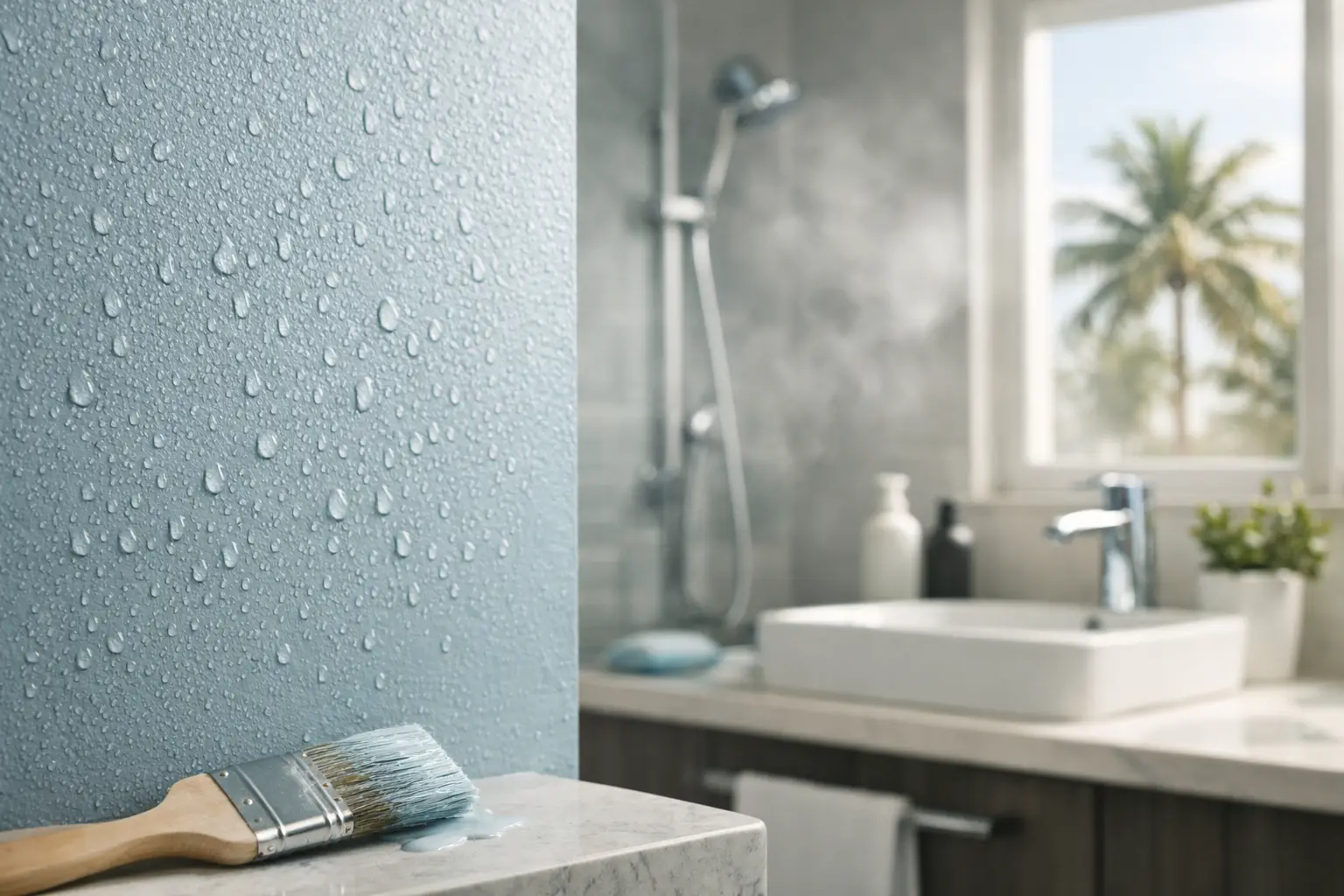
A bathroom can look freshly painted on move-in day and show peeling around the shower, dark spotting near the ceiling, or bubbling drywall only months later. In Southwest Florida, bathroom paint humidity resistance is not a minor product feature. It is part of protecting the walls, ceiling, trim, and drywall from daily steam plus the region’s naturally humid air.
The right paint matters, but it cannot compensate for moisture damage, poor surface preparation, or inadequate ventilation. A durable bathroom finish comes from matching the coating to the room, repairing problems before painting, and allowing enough drying time between each step.
Why Bathroom Humidity Causes Paint Failure
Every hot shower releases moisture into the air. That moisture settles on cooler surfaces, especially ceilings, upper walls, window trim, and the wall behind a toilet. In a well-ventilated bathroom, much of it is removed quickly. In a bathroom with a weak exhaust fan, closed windows, or limited airflow, it stays long enough to work its way into paint films and porous drywall.
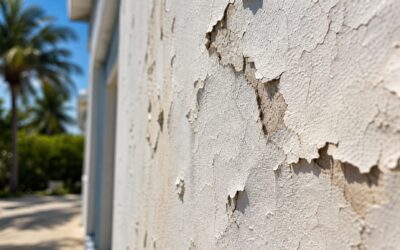
Humidity alone does not always cause paint to peel. The usual problem is a combination of moisture and weak adhesion. Paint applied over soap residue, glossy old paint, mildew staining, damp drywall, or unprimed repairs may initially look fine. Once steam repeatedly reaches that surface, the bond can fail. Blistering, cracking, and flaking often follow.
Florida homes can face another challenge: air conditioning. A cool interior surface can collect condensation when warm, damp air enters the room. Seasonal homes are particularly vulnerable when the AC is adjusted or turned off for extended periods. A bathroom that is closed up without reliable climate control can develop mildew even if it is not used every day.
What Bathroom Paint Humidity Resistance Actually Means
Humidity-resistant bathroom paint is designed to form a tougher, less porous film than standard wall paint. Better-quality formulations resist repeated exposure to moisture, are easier to wash, and are less likely to soften or lose adhesion in steamy conditions. Many also contain mildewcides that help resist mildew growth on the paint surface.
That last point deserves a distinction. Mildew-resistant paint can help prevent surface mildew, but it does not solve a moisture source behind the wall or inside the ceiling. If there is a plumbing leak, roof leak, failed shower surround, or recurring condensation issue, painting over the evidence only delays the repair.
For most residential bathrooms, a premium acrylic latex paint formulated for kitchens and baths is a practical choice. Acrylic coatings provide flexibility, adhesion, and washability while keeping odor and cleanup manageable. They are generally a better fit for occupied homes than older high-VOC coating systems.
The sheen also affects performance. Flat paint can hide imperfections, but it is usually less washable and more vulnerable to moisture staining. A satin finish is often a dependable choice for bathroom walls because it balances cleanability with a soft appearance. Semi-gloss can provide additional washability for trim, doors, and areas that receive frequent splashes, although it will reveal drywall flaws more readily. For ceilings, a quality moisture-resistant matte or satin ceiling coating can work well, depending on the condition of the surface and how much steam the room produces.
Start With the Moisture Source, Not the Paint Color
Before selecting a color, take a close look at where the bathroom is showing wear. Peeling paint above a shower may point to weak exhaust ventilation. A brownish ring on the ceiling may indicate a leak. Repeated dark spotting in one corner can signal stagnant air, an uninsulated surface, or an exterior moisture issue.
A few conditions should be addressed before painting:
- An exhaust fan that does not vent outdoors, is undersized, or is rarely used
- Leaks around plumbing fixtures, shower walls, windows, or the roof above the bathroom
- Loose caulk around tubs, showers, backsplashes, and trim
- Soft, swollen, stained, or crumbling drywall
- Existing mildew that has not been properly cleaned and treated
If the drywall is soft or has delaminated, it should be repaired or replaced rather than simply coated. If mildew is present, it needs to be cleaned using an appropriate mildew-removal process, and the surface must dry fully before primer or paint is applied. Painting over active mildew can trap staining beneath the new finish and allow it to return.
Preparation Makes the Finish Last
The quality of the preparation is often more important than the label on the paint can. Bathrooms collect hairspray residue, body oils, soap film, and cleaning-product buildup. These contaminants interfere with adhesion, especially on walls near vanities and showers.
A proper repaint typically begins with cleaning, mildew treatment where needed, and removal of loose or failing paint. Glossy surfaces should be dulled so the new coating has a profile to grip. Cracks, nail holes, and damaged drywall should be repaired, sanded smooth, and dusted carefully. Caulk should be replaced where gaps could allow moisture behind trim or around fixtures.
Primer is not always necessary over sound, previously painted walls. It is necessary when there are bare drywall repairs, water stains, patched areas, major color changes, or surfaces with uncertain adhesion. A stain-blocking primer may be needed for water discoloration, but the source of the stain must be corrected first. Otherwise, the problem can return through even the best coating system.
Timing matters in Florida, too. Paint should not be applied to a damp surface or in a bathroom that is full of steam from a recent shower. The room should be dry, reasonably temperature-controlled, and ventilated according to the coating manufacturer’s instructions. Rushing the second coat or using the shower before the paint has cured can compromise the finish.
Choosing Paint for Different Bathroom Conditions
Not every bathroom needs the same system. A powder room with no shower has far lower moisture exposure than a primary bathroom used by a family every morning. Guest baths in seasonal homes may have humidity concerns even when they see little daily use.
For a frequently used full bathroom, choose a premium bathroom-rated acrylic paint with good scrub resistance and a satin wall finish. Pair it with a durable trim coating for doors, baseboards, and window trim. These areas are often touched, cleaned, and exposed to splashes more than the walls themselves.
For a small bathroom with limited ventilation, paint selection should be paired with airflow improvements. A stronger exhaust fan, regular fan use during and after showers, and keeping the door open when practical can extend the life of the coating. Paint cannot be expected to perform well in a room that remains wet for hours.
For older bathrooms with patched drywall or prior water damage, the surface may need more extensive repair and priming. This is where a professional assessment can prevent a cosmetic repaint from becoming a short-term fix. A clean-looking ceiling is not a durable ceiling if the drywall above it is compromised.
Habits That Protect a Freshly Painted Bathroom
Once the paint is cured, simple routines make a meaningful difference. Run the exhaust fan during showers and for at least 20 to 30 minutes afterward. If the fan is noisy, weak, or ineffective, it is worth having it evaluated. Keep shower doors or curtains positioned so water does not repeatedly soak painted walls or trim.
Wipe down heavy condensation when it collects on windows, mirrors, or walls. Use gentle cleaning products rather than abrasive scrubbers that can dull the finish. If you see a small area of mildew, clean it promptly and look for the reason it developed instead of waiting for the spot to spread.
For seasonal residents, maintain reasonable indoor temperature and humidity control while the home is unoccupied. Closing a Florida home for months without adequate climate management can create conditions that affect paint, drywall, cabinetry, and furnishings well beyond the bathroom.
When It Is Time to Call a Professional
A bathroom repaint is a straightforward upgrade when the existing surface is sound. It becomes more involved when there are recurring stains, widespread peeling, drywall damage, or signs of an ongoing moisture problem. In those cases, the right sequence is inspection, repair, preparation, primer when needed, and a finish coat selected for the room’s use.
With more than 15 years serving the Gulf Coast and over 2,700 completed projects, Pro Painting & Associates helps homeowners choose paint systems that fit Florida conditions rather than relying on a one-size-fits-all solution. Clear preparation standards and careful cleanup matter just as much as a polished final color.
A bathroom should feel clean, comfortable, and easy to maintain. If paint is failing, treat it as useful information: identify the moisture issue, correct the surface, and give the room a coating system built for the way your home is actually used.