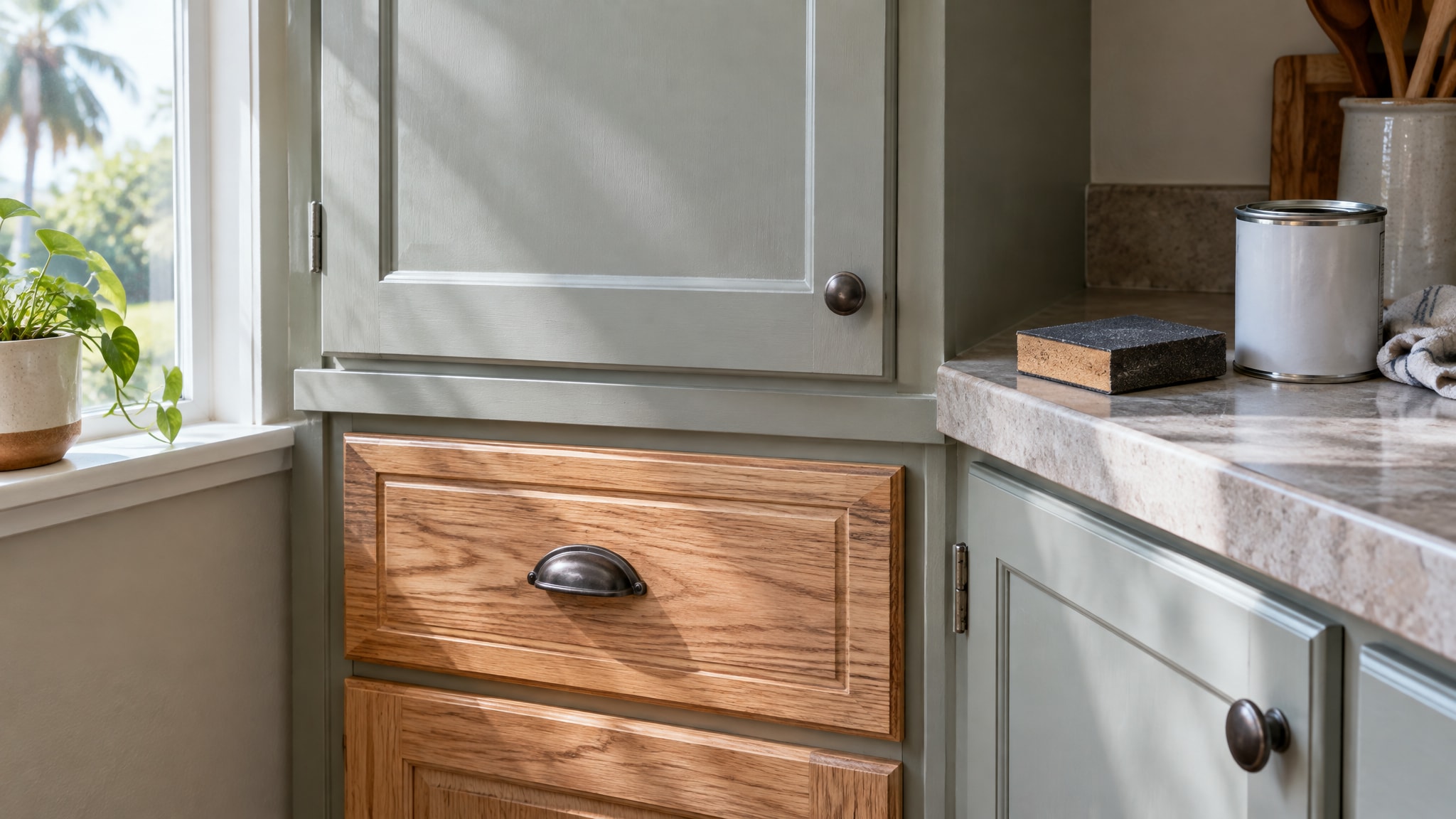
Homeowners in Venice, Sarasota, and Manatee counties often face a specific dilemma when updating their kitchens without a full demolition. You might know you want to keep your existing cabinet boxes but remain uncertain whether to paint them or restore the natural wood through refinishing. Both services refresh a kitchen’s appearance, but they use different processes and materials, and the right choice depends on what you currently have installed.
Understanding the difference between cabinet painting and refinishing kitchen surfaces prevents costly mistakes and helps the new finish survive Florida’s humidity. Pro Painting & Associates has served Venice, FL homeowners for over 15 years with licensed and insured cabinet services, helping clients make this decision based on the material in front of them rather than a trend. This comparison breaks down the technical differences so you can choose the right service for your home’s specific conditions.
Defining Cabinet Painting vs Refinishing for Florida Kitchens
Cabinet painting applies an opaque color system, using primers and topcoats, that covers the existing surface completely, hiding grain patterns and old finishes. Refinishing strips or sands away old coatings to expose bare wood, then applies stains and clear protective layers that bring out the natural grain instead of covering it. The difference comes down to opacity: painting gives you a uniform solid color, and refinishing keeps the variation you get in real timber.
Your current cabinet material decides which path is even possible.
Painting works on almost any substrate, including MDF, laminate, thermofoil, and solid wood, because the primer acts as a bonding bridge between the surface and the pigmented topcoat. Refinishing needs genuine wood veneer or solid lumber, since stain has to penetrate cellulose fibers to create color. Synthetic surfaces simply won’t take a traditional refinishing treatment. If you want a dramatic color shift from dark oak to bright white, you need painting. If you want to keep the character of cherry or maple, look at refinishing instead.
The Professional Cabinet Painting Process Explained
A durable painted finish in coastal Florida takes more than simple cleaning. Professional cabinet painters treat thorough degreasing and bonding-primer application as non-negotiable steps for lasting adhesion in humid kitchens, where cooking oils and salt air constantly work against surface integrity. Skip these foundational steps and you’ll see peeling within months, especially around sinks and dishwashers where moisture exposure runs highest.
Surface Preparation and Priming Standards
Proper prep starts with industrial-grade degreasers that strip years of cooking residue, wax polish, and skin oils that household cleaners leave behind. Technicians then sand every surface to give the primer something to grip, filling dings and routed grooves with wood filler that matches the substrate’s expansion rate. A dedicated bonding primer follows. It’s formulated to grip slick surfaces like laminate or old varnish while blocking tannins that would otherwise bleed through lighter paint colors.
This multi-step process lets the topcoat bond mechanically instead of just sitting on the surface.
Spray Painting Cabinets vs Hand Painting
How a painter applies the finish decides the texture and overall quality of your cabinet doors and drawer fronts. Spray-applied catalyzed lacquer or urethane enamel typically gives a smoother, more durable finish than brush-applied paint, because atomized particles lay flat without bristle marks or roller stipple. Hand painting still works for small touch-ups or textured distress effects, but it can’t match the factory-smooth surface that high-volume low-pressure spray equipment produces under controlled conditions.
Spraying also lets technicians reach inside frame joints and detailed molding profiles where a brush skips or pools excess product. That gives you uniform thickness across complex door styles like shaker or raised panel, without the weak spots where premature wear usually starts. The sheen looks manufactured rather than renovated, and that matters for resale value in a competitive Sarasota market.
Kitchen Cabinet Refinishing Options and Techniques
Refinishing keeps the warmth of natural wood while updating its tone to match current design preferences. Stripping removes old lacquer and stain down to bare cellulose, so fresh pigment penetrates evenly instead of turning muddy, which is what happens when you layer new stain over a sealed surface. Glazing adds depth by depositing translucent color into corners and carvings, which brings out architectural details that flat paint would hide.
Staining and Glazing Natural Wood
Staining takes patience, because each coat needs to dry fully before you can assess it and adjust. Oil-based penetrating stains give rich color and a forgiving open time for wiping, while waterborne alternatives dry faster with lower VOC emissions, which suits an occupied home. Clear topcoats then seal the stained surface against spills and UV damage, with conversion varnish or polyurethane providing the abrasion resistance a kitchen workspace needs every day.
Glaze sits between the stain and the topcoat, adding antiquing or tonal variation to customize stock cabinetry. It works best on open-grain woods like oak or ash, where the glaze settles into the texture and creates visual interest that smooth maple can’t match. For guidance on wood species common to regional architecture, cabinet refinishing specifics in Sarasota County can help align expectations with the materials available.
When Refinishing Is Not Viable
Not every cabinet qualifies for refinishing, no matter what the homeowner prefers. Laminate, melamine, and thermofoil surfaces have no wood fiber to absorb stain, which leaves painting as the only refresh option short of full replacement. Severely water-damaged veneer that has delaminated or bubbled can’t be sanded flat enough for a good result, and particleboard cores exposed by edge-banding failure will swell further during stripping.
Refinishing also won’t fix structural problems like warped doors or broken joinery; painting just covers those up. If your cabinets have real functional defects, restoration labor is money that doesn’t pay off until you deal with the underlying issue first. An honest assessment at the estimate stage saves you from paying for refinishing work that was never going to deliver the look you wanted.
Comparing Cabinet Finish Durability and Maintenance
Florida’s coastal environment puts cabinet finishes through more than inland homes ever see. Salt-laden humidity speeds up corrosion on metal hardware and encourages mold on organic coatings, while UV exposure through windows fades pigments unevenly over time. According to professionals in the field, modern waterborne urethane enamels now match the hardness and chemical resistance of traditional solvent-based lacquers while releasing fewer VOCs, which makes them safer for an occupied home without giving up performance.
Moisture and Heat Resistance in Coastal Homes
Catalyzed finishes cross-link chemically as they cure, forming molecular bonds that resist water penetration far better than an air-dry paint. That chemical cure creates a barrier against the steam from dishwashers and kettles that would otherwise soften an uncured film and cause it to lose adhesion. Urethane-modified alkyds offer similar protection with easier application, though they need longer cure times to reach full chemical resistance in the high humidity typical of a Venice summer.
Heat resistance matters just as much near ovens and cooktops, where temperatures run well above ambient room conditions. Manufacturers state that quality catalyzed products hold up to roughly 200 degrees Fahrenheit without yellowing or softening, which avoids the sticky surfaces that plague weaker coatings in warm climates. The finish chemistry you choose directly affects how well your cabinets hold up over decades of thermal cycling without cracking or discoloring.
Long-Term Care Requirements
Painted surfaces show chips and scratches more readily than stained wood, because the opaque color contrasts sharply with any exposed substrate underneath. Touch-up kits handle spot repairs, but busy spots like sink bases and dishwasher surrounds may need recoating after several years of heavy use. Stained and sealed wood hides minor abrasions better, since the color runs through the material itself, though the clear topcoat eventually wears thin and needs resealing.
Maintenance intervals vary a lot based on how a household uses its kitchen and cleans it. Harsh chemical cleaners strip protective layers early regardless of finish type, so pH-neutral products extend service life substantially. Homeowners who understand their finish’s care needs avoid premature failure and get more out of their investment, whether they’re weighing repainting versus replacing cabinets or just planning a long-term upkeep budget.
Cost Factors for Sarasota Cabinet Painters and Refinishers
Pricing for a cabinet transformation depends on variables a generic online estimator can’t capture. Kitchen size and door count set the baseline labor hours, but intricate door profiles with multiple recesses need a lot more prep and spray time than flat slab designs. Existing condition matters just as much; heavily soiled or damaged surfaces need extra degreasing passes, filler work, and sanding cycles that add billable hours before any finish material even touches the surface.
Product choice affects price through both material cost and application complexity. Catalyzed lacquers cost more than standard enamels but cure faster and last longer, which can mean better lifetime value despite the higher upfront expense. Detailed written quotes from local contractors let you compare equivalent scopes instead of bottom-line numbers that leave out critical prep steps. Requesting a free cabinet painting estimate gets you accurate pricing tied to your kitchen’s dimensions, condition, and desired outcome.
Choosing Between Painting and Refinishing for Your Home
The decision comes down to three things: existing material quality, the aesthetic change you want, and your budget. Painting gives you maximum color flexibility and works on any substrate, which makes it a good fit for dated honey oak or laminate cabinets that need a complete visual change. Refinishing plays up natural wood appeal and preserves the craftsmanship details that matter for resale value in traditional Florida markets, where buyers like authentic materials.
Matching Service to Cabinet Condition
Assess your cabinets honestly before committing to either path. Solid wood construction with tight joinery and minimal damage suits refinishing well, especially if the existing stain tone just needs updating rather than hiding. Painted finishes forgive more structural flaws, but they can’t restore the value of quality hardwood that refinishing reveals, so covering premium materials in opaque color can actually lower property value instead of raising it.
Aesthetic Goals and Resale Value
Think about how long you plan to stay and what buyers in your neighborhood expect. Neutral painted kitchens photograph well for listings and appeal to a broad range of buyers looking for something move-in ready. Stained wood signals quality and permanence to buyers who connect natural materials with higher construction standards, especially in established Venice and Sarasota communities where architectural authenticity commands a premium.
Neither approach guarantees a return without proper execution, so weigh your choice against both personal satisfaction and market realities. Your kitchen has to work for you day to day and hold its value, and the right finish does both.
Hiring Licensed Cabinet Professionals in Venice and Sarasota
Verifying credentials protects you from liability and from substandard work that costs more to fix later than it would have cost to do right the first time. Florida licensing requirements mean contractors carry workers’ compensation and general liability insurance, which shields homeowners from accident-related expenses on their own property. Local experience matters for understanding regional humidity, salt air exposure, and building codes that an out-of-area contractor might miss when specifying products or scheduling work.
Pro Painting & Associates brings documented, 15-plus years of experience serving the community to every project. A contractor hiring checklist helps you spot red flags before signing a contract and sets baseline expectations for communication, cleanup, and warranty terms.
Frequently Asked Questions
Can I refinish my laminate or thermofoil cabinets instead of painting them?
No, laminate and thermofoil surfaces cannot be refinished because they lack wood fibers that absorb stain. These synthetic materials require painting with specialized bonding primers designed for non-porous substrates. Attempting to stain them results in uneven color that wipes off rather than penetrating the surface.
How long does professionally painted cabinetry typically last in Florida humidity?
Professionally applied catalyzed urethane enamel on properly prepared cabinets typically lasts 10-15 years in coastal Florida conditions before showing significant wear. Humidity resistance depends entirely on correct primer selection and complete curing rather than paint brand alone. Regular maintenance with pH-neutral cleaners extends this lifespan considerably beyond unsealed or poorly prepped alternatives.
Is spray painting really necessary or can hand-painted cabinets look good?
Hand painting can produce acceptable results on simple flat surfaces but cannot match the smoothness of spray application on detailed door profiles. Brush marks and roller stipple remain visible even with skilled technique, especially under kitchen lighting that highlights texture imperfections. Spray equipment atomizes finish into uniform particles that self-level into factory-quality surfaces without manual smoothing.
What makes cabinet refinishing different from just applying new stain over old finish?
True refinishing strips all existing coating to bare wood before applying fresh stain, ensuring even penetration and color consistency. Applying new stain over sealed surfaces creates muddy, blotchy results because the pigment cannot penetrate uniformly through old lacquer or varnish. Proper stripping adds labor cost but prevents the disappointing outcomes that shortcut methods produce.
How do I know if my cabinets are too damaged for refinishing?
Severe water damage causing veneer delamination, swollen particleboard edges, or structural joint failure disqualifies cabinets from refinishing. Surface scratches and minor dings repair easily during prep, but compromised substrate integrity worsens during stripping processes. A professional assessment identifies salvageable units versus those requiring replacement before you invest in restoration labor.