Choosing the best exterior paint for Florida humidity means understanding that Gulf Coast weather attacks coatings from two directions at once. National paint brands often formulate products for average American conditions. Venice and Sarasota homes face extreme UV radiation paired with persistent moisture that standard formulations cannot withstand. Your home needs a coating system built for this dual-threat environment, not a generic product designed for milder climates.
Why Florida’s Gulf Coast Climate Demands Specialized Exterior Paint
Florida’s average annual UV index exceeds 8, which speeds up binder breakdown in exterior coatings well past what northern climate benchmarks assume. This intense solar radiation breaks the chemical bonds that hold paint films together. High humidity adds moisture that undermines adhesion from beneath.
UV Degradation vs. Moisture Damage
Solar radiation breaks down acrylic binders through photo-oxidation. The paint film turns brittle and loses its protective qualities over time. At the same time, afternoon thunderstorms and persistent ambient moisture force water vapor into microscopic pores in the substrate.
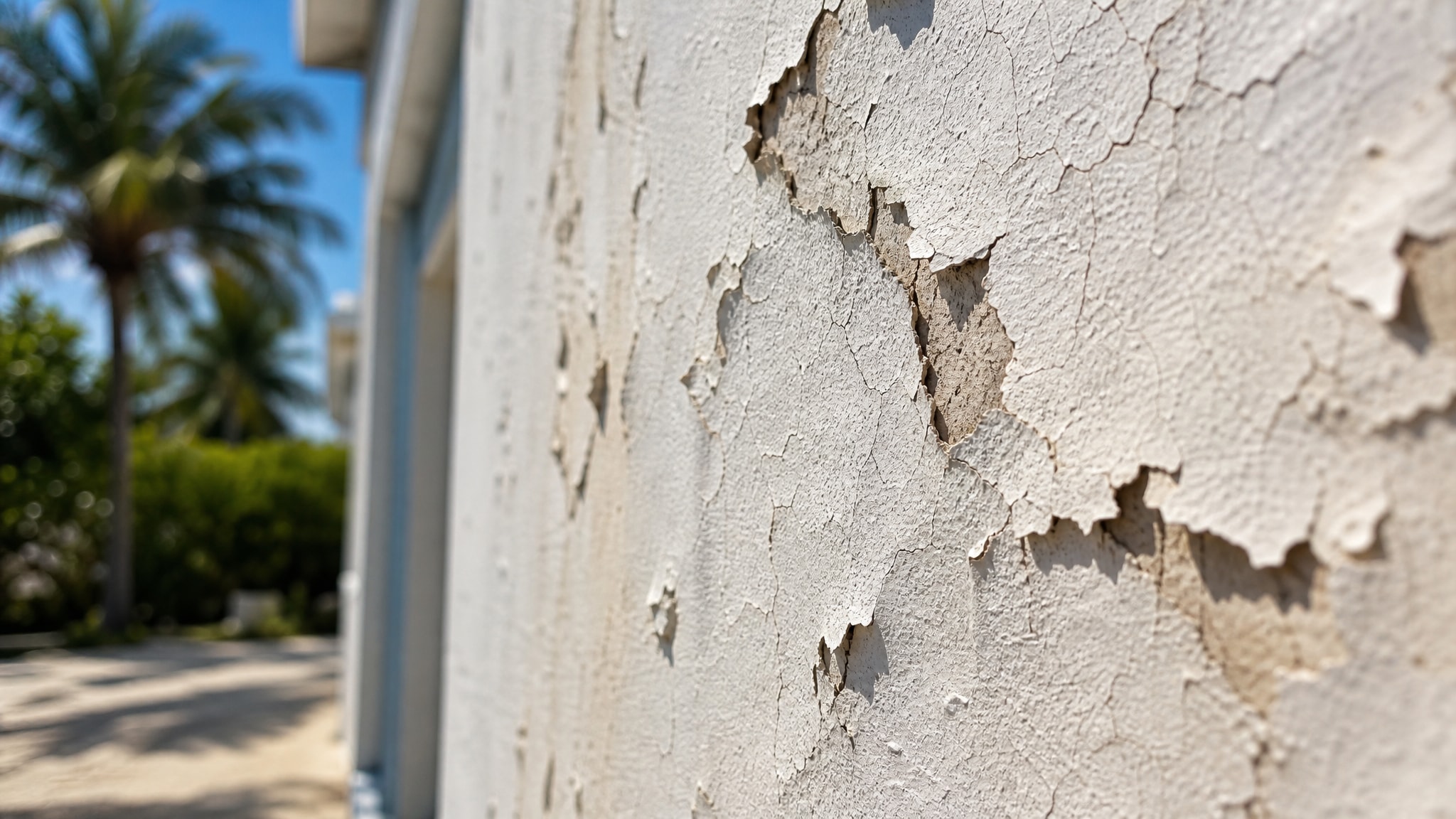
That combination creates a failure cycle: UV-weakened paint can no longer flex to accommodate the expansion trapped moisture causes. Peeling, chalking, and color loss show up years ahead of the manufacturer warranties written for temperate zones.
Salt Air and Stucco Porosity
Stucco is different from wood or vinyl siding because its porous structure absorbs and holds moisture far more readily. Coastal salt aerosols make things worse, depositing hygroscopic salts on surfaces that attract and hold atmospheric moisture against the paint film.
You cannot treat stucco like other siding materials when choosing coatings for a Gulf Coast home. The substrate’s alkalinity and absorption rate call for primers and topcoats built to manage vapor transmission while resisting salt-driven wear.
Key Features of Mildew Resistant Exterior Paint for Humid Zones
True mildew resistant exterior paint contains encapsulated mildewcides that release slowly over years instead of washing out during the first summer storm season. Standard formulations rely on surface-active biocides that leach away quickly under Florida’s frequent rainfall, leaving the coating open to biological growth within months.
Mildewcides and Alkalinity Resistance
Fresh stucco and concrete block hold high pH levels that burn through ordinary paint binders, causing discoloration and adhesion failure. Stucco homes in Venice often show alkali burn when painted without proper pH-neutralizing primers, and the discoloration can appear within months.
Alkali-resistant primers create a stable barrier between the alkaline substrate and the finish coat, heading off the chemical reactions that ruin color and durability. This step is non-negotiable for any stucco surface less than five years old or recently repaired.
Breathability and Vapor Transmission
Humidity proof paint has to let trapped moisture escape as vapor without blistering the coating film. Waterproof sealers that block all moisture movement actually trap water inside stucco walls, and the pressure that builds forces the paint off the substrate from behind.
Breathable acrylic formulations balance liquid water resistance against vapor permeability. That distinction is what separates professional-grade coatings suitable for Gulf Coast stucco from consumer products marketed as moisture barriers that fail badly in humid climates.
Selecting UV Resistant Paint Florida Formulations for Color Retention
Inorganic pigments made from metal oxides resist UV fading far better than the organic pigments used in many bright and deep-tone paints. When you choose colors for your home’s exterior, understanding this chemistry helps you avoid disappointment as darker shades chalk and fade under direct Gulf sun.
Pigment Chemistry: Inorganic vs. Organic
Iron oxide reds, titanium dioxide whites, and chromium oxide greens hold their molecular structure despite decades of UV exposure. Organic pigments that produce vibrant blues, purples, and some reds break down at the chemical level under intense solar radiation.
That doesn’t mean you have to avoid every saturated color, but it does mean setting realistic expectations for how long the color lasts. Lighter tones built on inorganic pigments hold their appearance much longer than deeper shades that rely on organic chemistry.
Reflective Technology and Heat Management
Lighter colors with high solar reflectance keep surface temperatures lower throughout the day, which reduces thermal expansion stress on stucco substrates. Dark colors absorb heat and cause the material underneath to expand and contract more, speeding up crack formation and coating fatigue.
Reflective pigment technology lets some mid-tone colors reach better heat rejection than traditional formulations manage. These pigments reflect infrared radiation while absorbing visible light, so you get better durability without being forced into stark white.
Best Paint for Stucco Homes in Venice and Sarasota Counties
Product selection depends heavily on the existing substrate condition and prior coating history, not on a universal recommendation. What works well for new construction may trap moisture and fail early on older stucco that has absorbed decades of humidity.
Elastomeric Coatings vs. Acrylic Latex
Elastomeric coatings bridge hairline cracks and offer strong waterproofing because of their thick, flexible film build. That same thickness cuts breathability, though, which makes elastomerics risky on older stucco that may hold trapped moisture from previous leaks or poor drainage.
High-build acrylic latex offers better vapor transmission while still bridging minor surface cracks. For most Venice and Sarasota homes with existing paint layers, premium acrylics strike the right balance of protection and permeability without the moisture-trapping risk of a full elastomeric system.
Addressing Hairline Cracks and Texture
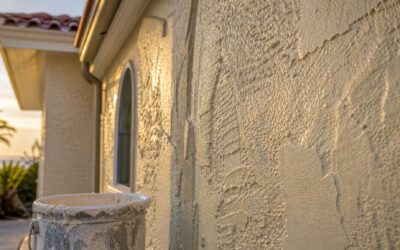
Stucco texture varies widely across local neighborhoods, from smooth finishes to heavy dash patterns, and each needs a different application approach. Deep textures need higher-build products to fill voids completely. Smoother finishes do better with thinner coats that keep detail without sagging.
Hairline cracks wider than 1/16 inch need caulking or patching before painting, no matter which coating you choose. No paint formulation can reliably bridge active structural movement, and trying wastes money on products that will crack again within months.
Professional Application Matters More Than Premium Product Selection
Licensed Florida painters consistently report that application errors cause more premature paint failures than product defects do in high-humidity coastal zones, according to industry consensus among Gulf Coast painting contractors. Even the most expensive humidity-resistant coating fails when it goes on over damp substrate, contaminated surfaces, or outside the recommended temperature and moisture range.
Surface Preparation Standards for Humidity
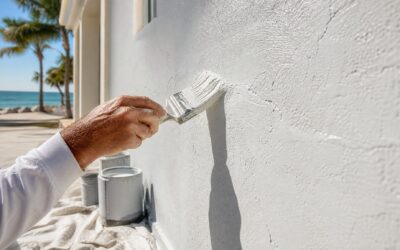
Proper preparation strips away chalked paint, biological growth, and salt deposits that block adhesion, long before the first brush stroke. Pressure washing alone isn’t enough. Surfaces need cleaning solutions that neutralize alkalinity and kill embedded mildew spores that survive water blasting.
Professional crews adapt preparation standards to current weather conditions and substrate moisture levels. Skipping this labor-intensive phase saves money upfront but guarantees costly rework when the new paint delaminates within the first year.
Moisture Testing and Curing Windows
Moisture meters give objective data about substrate readiness that a visual check cannot. Licensed contractors test multiple locations and wait for readings below manufacturer thresholds before they proceed, even when schedules push them to move faster.
Curing windows matter as much as application conditions, since paint keeps forming its film for days after it dries to the touch. Afternoon thunderstorms during that window can wash away uncured binders or introduce moisture that blisters the developing film, and then the only fix is stripping it and starting over.
Understanding exterior painting cost factors helps homeowners budget for proper preparation instead of cutting corners to afford premium paint. The investment in correct application protects the entire project from early failure.
Planning Your Exterior Painting Project in 2027
Scheduling exterior work during drier months cuts down on moisture-related application failures and extends coating lifespan. Late fall through early spring typically offers the most stable conditions for painting in Venice and Sarasota counties, though weather variability calls for flexibility even in the best seasons.
Big-box store employees don’t have the field experience to assess your specific substrate conditions and recommend the right products. Consulting licensed Venice exterior painters gets you guidance based on actual local performance, not national marketing claims.
That expertise extends beyond exterior surfaces to moisture management across your property. Coordinating exterior painting with interior moisture protection strategies treats humidity as one problem instead of a set of separate symptoms.
Generic brand recommendations can’t account for the specific mix of UV intensity, humidity, and stucco characteristics found along Florida’s Gulf Coast. A professional assessment gets you the product and application plan your home actually needs.